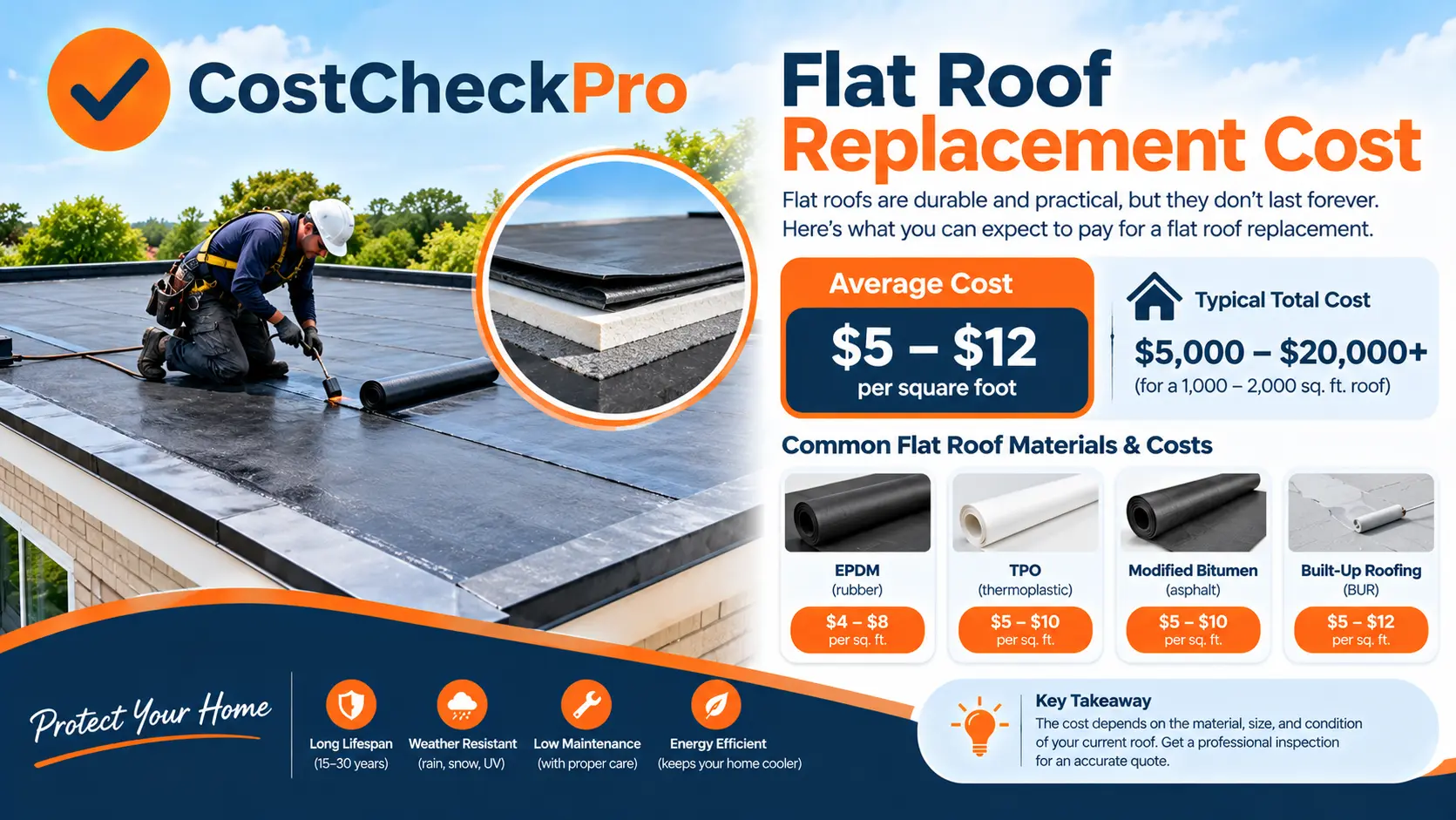
A flat roof replacement typically costs between $5 and $14 per square foot, which puts most homes between $4,500 and $15,000 total depending on the roofing material, the size of the roof and how much of the old structure needs to be torn off first. The material you choose makes the biggest difference in price, since flat roofing comes in several very different systems that range from basic rolled asphalt to high-end rubber and synthetic membranes. If your home has a traditional sloped roof instead, our roofing cost calculator gives a faster estimate for shingle replacement, since the cost drivers for sloped roofs are somewhat different from what applies to flat roofing.
Flat roofs are common on additions, porches, garages, modern-style homes and most commercial buildings, and they come with their own set of pricing considerations that don't apply to a typical pitched asphalt shingle roof. This guide walks through what actually drives the cost up or down, how the major flat roofing materials compare, and what to expect from the replacement process from start to finish.
Average cost by material
| Flat roof material | Cost per square foot | Typical lifespan |
|---|---|---|
| Rolled asphalt | $4 – $8 | 10 – 15 years |
| EPDM rubber membrane | $5 – $9 | 20 – 25 years |
| TPO membrane | $6 – $10 | 20 – 25 years |
| PVC membrane | $7 – $13 | 25 – 30 years |
| Modified bitumen | $5 – $11 | 15 – 20 years |
| Spray foam (SPF) | $6 – $14 | 20 – 30 years |
These ranges reflect installed cost, meaning materials and labor combined, but they don't include tear-off of the old roof or any deck repairs that might be needed underneath. Those get added separately once a contractor has inspected the roof in person.
What drives the price up or down
Tear-off and disposal are often the first unexpected cost homeowners run into. Removing an old flat roof down to the deck, especially one with multiple layers built up over the years from past patch jobs, typically adds $1 to $3 per square foot on top of the new material cost. Flat roofs in particular tend to accumulate layers, since it's historically been common practice to install a new membrane directly over an old one rather than tearing it off first, which eventually catches up with the building when a full tear-off becomes necessary. If you're clearing out old roofing debris along with other junk from a larger renovation project, our junk removal cost calculator can estimate that cost separately.
Roof size and accessibility matter quite a bit too. A small flat roof over a porch or addition costs more per square foot to work on than a full home replacement, since there's a minimum labor cost that applies no matter how small the job is, and crews still need to haul equipment and set up safely for even a modest-sized project. On the other end, a roof that's hard to access, for example one on a second story with limited space for a dumpster or material staging, can also push labor costs higher than a similarly sized roof that's easy to reach from the ground.
Drainage and insulation work can add meaningfully to the total if your current roof has ongoing pooling water issues. Flat roofs need at least a slight slope, usually a quarter inch per foot, or properly placed drains to move water off efficiently. If your existing roof was built without enough slope, a contractor may recommend tapered insulation, which is insulation board cut at a gradual angle to create the slope that wasn't there originally, or additional drains to prevent the water pooling problems from simply recurring on the new roof. This adds to the base material and labor cost but is usually worth doing right the first time, since skipping it tends to mean dealing with the same leak issues again within a few years.
The condition of the roof deck itself is another major cost variable that's hard to know for certain until the old roofing material comes off. If water has been getting into the building through small leaks over time, the plywood or OSB deck underneath can rot, and any rotted sections need to be cut out and replaced before new roofing material goes down. This is one of the harder costs to estimate in advance, which is why most contractors build some contingency language into their quotes for deck repair discovered during tear-off.
Local labor rates and the time of year also factor in. Roofing contractors in high cost-of-living areas or regions with intense seasonal demand, such as right before hurricane season in coastal states, often charge more simply due to demand and limited crew availability. Scheduling a replacement during a contractor's slower season, typically late fall or winter in most climates, can sometimes mean more competitive pricing and faster scheduling.
Flat roof vs sloped roof replacement
Flat roofing generally costs less upfront than a sloped asphalt shingle roof per square foot, but the lifespan is usually shorter, especially for basic rolled asphalt systems that may only last 10 to 15 years compared to 20 to 25 years for a quality shingle roof. Higher-end flat roofing options like PVC or spray foam close that lifespan gap considerably and can last close to as long as a shingle roof, so the material you pick has a real effect on long-term value, not just the upfront bill. For a side-by-side look at shingle pricing on a traditional pitched roof, see our roofing cost calculator, which breaks down costs by shingle type and roof complexity.
It's also worth noting that flat roofs and sloped roofs aren't always interchangeable options for the same building. Many homes with flat sections, such as additions, sunrooms or garage extensions, were designed that way architecturally, and converting to a sloped roof would involve significant structural changes well beyond the cost of a standard roof replacement. For these sections, comparing material options within flat roofing systems is usually the more realistic conversation.
Residential vs commercial flat roofing cost
Commercial flat roofs tend to cost somewhat less per square foot than residential ones of a similar size, mainly because commercial projects are typically larger and benefit from economies of scale in material purchasing and labor efficiency. A small residential flat roof section, like a 400 square foot addition, carries a higher per-square-foot cost than a 10,000 square foot commercial building roof, even using the same membrane material, simply because setup and mobilization costs get spread across much more square footage on the larger job. Commercial roofs also sometimes require additional considerations like rooftop HVAC unit flashing, walkway pads for maintenance access and more robust fire ratings, which can add cost depending on the building's use.
Materials cost vs labor cost breakdown
For most flat roofing projects, materials typically account for 40 to 55 percent of the total cost, with labor making up the remaining 45 to 60 percent. This labor-heavy split is part of why flat roofing is sensitive to local wage rates and contractor availability, and it's also why getting multiple quotes matters so much, since labor pricing can vary more between contractors than material pricing does. A contractor who owns their own equipment and runs an efficient crew may be able to offer meaningfully lower labor costs than one who subcontracts parts of the job out, without any difference in the quality of materials used.
Signs you need a flat roof replacement rather than a repair
Pooling water that doesn't drain within 48 hours after rain, visible cracking or blistering across large sections of the membrane, and leaks that keep returning after repairs are all signs the roof has reached the end of its useful life rather than needing another patch. A roofing contractor can inspect the deck underneath to confirm whether it's still in good condition or whether water has caused rot that needs addressing as part of the replacement.
Other warning signs include a membrane that's become brittle and cracks when gently flexed, seams that have separated or are lifting at the edges, and a noticeable increase in indoor humidity or musty smells that suggest moisture is getting trapped somewhere in the roofing system even without an obvious visible leak. Granule loss on modified bitumen roofs, similar to what happens on asphalt shingles, is another sign of a membrane nearing the end of its service life.
How climate affects flat roof lifespan and cost
Flat roofs in hot, sun-heavy climates tend to break down faster than the same material installed in a cooler region, since UV exposure and repeated heat expansion and contraction wear on the membrane over time. Florida homeowners in particular deal with intense sun plus heavy seasonal rain and occasional hurricane-force wind, which is a tough combination for any flat roofing material and one reason local roofing demand tends to spike after major storms. Lighter-colored membranes like TPO or PVC reflect more heat than dark rolled asphalt, which can extend lifespan in hot climates and modestly reduce cooling costs at the same time. If you're in Florida, our Florida home service cost guide covers regional pricing factors and storm-related roofing demand in more detail, including how hurricane season affects contractor availability and pricing.
Colder climates bring a different set of challenges, mainly around ice and snow load. Flat roofs need to be engineered to handle the weight of accumulated snow, and ice damming, where melted snow refreezes at the roof edge and backs up under the membrane, can cause leaks even on a well-installed roof if drainage wasn't planned with winter conditions in mind. Contractors in cold climates often recommend slightly different insulation and drainage configurations than what would be standard in a warmer region.
Energy efficiency and flat roofing
Reflective flat roofing membranes, sometimes marketed as cool roofs, can noticeably reduce how much heat transfers into the building below, which translates to lower air conditioning costs in warm climates. TPO and PVC membranes are naturally more reflective than asphalt-based systems, and some manufacturers offer specifically engineered reflective coatings for EPDM as well, since standard black EPDM absorbs heat rather than reflecting it. This is worth discussing with your contractor if energy costs are a meaningful factor in your material choice, since the slightly higher upfront cost of a reflective membrane can pay for itself over several years in reduced cooling bills, particularly in hot, sunny regions where air conditioning runs for much of the year.
Insulation thickness also plays a role beyond just supporting proper drainage slope. Upgrading to a thicker insulation layer during a replacement, while it adds to the upfront cost, can meaningfully improve a building's overall energy efficiency, and some utility companies offer rebates for roofing projects that meet certain insulation standards, which is worth asking about before the project starts.
Insurance and storm damage considerations
If your flat roof was damaged by a storm, hail or fallen debris, it may be covered under your homeowners or commercial property insurance policy, depending on your coverage and the documented cause of damage. Insurers typically want clear proof of the damage and its cause, so photographing the roof promptly after any storm event and getting a written inspection report from a licensed contractor strengthens any claim you file. Wear and tear from normal aging, on the other hand, is usually not covered by standard policies, which is one reason many homeowners choose to replace an aging flat roof proactively rather than wait for a leak to force the issue through an uncovered claim.
It's also worth reviewing your policy's specific language around roof age, since some insurers reduce coverage or apply actual cash value depreciation on roofs past a certain age rather than paying full replacement cost. Understanding this ahead of time can factor into the decision of whether to replace an aging roof before it fails rather than after.
Financing a flat roof replacement
Because a full flat roof replacement is a significant expense, many homeowners look into financing options rather than paying the full cost upfront. Common routes include a home equity line of credit, a personal loan, or financing offered directly through the roofing contractor, which some companies provide in partnership with third-party lenders. Contractor-offered financing can be convenient but it's worth comparing the interest rate and terms against what a bank or credit union would offer, since promotional rates don't always stay favorable for the full repayment period. Getting the full project cost in writing before applying for financing helps avoid surprises partway through approval.
Choosing a flat roofing contractor
Flat roofing is a more specialized skill than standard shingle installation, since each membrane system, whether EPDM, TPO, PVC or modified bitumen, has its own installation requirements and seaming techniques that directly affect how long the roof actually ends up lasting in practice. When comparing contractors, ask specifically about their experience with the material you're considering, request to see photos or references from past flat roof installations, and confirm whether they offer a workmanship warranty that's separate from the manufacturer's material warranty.
A contractor who only works with one material type isn't necessarily a red flag, since many flat roofers specialize for good reason, but it's worth knowing so you can compare their recommendation against what else is available on the market. It's also reasonable to ask how long the contractor has been in business locally, since roofing warranty claims sometimes come up years later and you want a company that's likely to still be around and reachable if an issue arises. You can request free quotes from local contractors through CostCheckPro to compare pricing and material recommendations side by side before committing to one company.
Warranty coverage to expect
Most flat roofing manufacturers offer material warranties ranging from 10 to 30 years depending on the membrane type and thickness, while workmanship warranties from the installing contractor typically run 2 to 10 years and cover installation errors specifically, as opposed to material defects. It's worth getting both warranties in writing before work begins, and asking what voids each one, since some manufacturer warranties require the roof to be installed and maintained by a certified installer to remain valid, and routine maintenance records may be required to make a claim down the line.
What the replacement process typically looks like
A flat roof replacement generally follows a consistent sequence regardless of which material you choose. First, the contractor tears off the old roofing material down to the deck, inspecting the plywood or OSB underneath for any rot or damage that needs addressing before moving forward. Any damaged deck sections are cut out and replaced at this stage. Next, insulation is installed, often with a tapered design if drainage needs correcting, followed by the new membrane or roofing system itself, which is mechanically fastened, fully adhered or ballasted depending on the specific product and roof design. Flashing around any roof penetrations, such as vents, skylights or HVAC units, is installed or replaced to ensure those vulnerable transition points are properly sealed. Finally, the contractor does a walkthrough inspection and typically provides documentation for warranty registration.
Common mistakes homeowners make during a flat roof replacement
One of the most common mistakes is choosing a contractor based purely on the lowest quote without verifying their specific experience with the chosen flat roofing material, which can lead to installation issues that only show up as leaks years later. Another is skipping the drainage conversation entirely and simply replacing the old membrane with new material over the same inadequate slope, which means the same pooling water problems that likely contributed to the original roof's failure will probably return. Homeowners also sometimes underestimate the importance of proper flashing around roof penetrations, since a technically sound membrane installation can still leak badly if the flashing around a vent pipe or skylight wasn't done correctly.
Maintenance tips to extend a flat roof's lifespan
Keeping drains and scuppers clear of leaves and debris is one of the simplest and most effective things a homeowner can do, since clogged drainage is a leading cause of pooling water that shortens a membrane's life. Walking the roof after major storms to check for visible damage, and avoiding unnecessary foot traffic the rest of the time, also helps, since repeated walking can gradually stress seams and fasteners over years of use. Scheduling a professional inspection once or twice a year catches small issues, like a lifted seam edge or minor punctures, while they're still inexpensive to fix.
Environmental considerations and recyclability
Some flat roofing materials are more environmentally friendly to dispose of than others. TPO and PVC membranes can often be recycled at the end of their service life through specialized roofing material recyclers, while rolled asphalt and modified bitumen typically end up in landfills since they're harder to separate and reprocess. If sustainability is a priority in your material decision, it's worth asking your contractor directly about recycling options in your area, since availability varies significantly by region and not every contractor is set up to handle recyclable tear-off material separately from standard waste disposal.
Getting an accurate quote
Because flat roof pricing depends heavily on which material system you choose and the current condition of your roof deck, the ranges in this guide are a useful starting point rather than a final number. The most reliable way to get a true cost for your specific roof is a written estimate from a licensed roofing contractor who inspects the roof in person and breaks out material, tear-off, deck repair, drainage work and labor as separate line items, so you can see exactly what's driving the total. You can also get free quotes through CostCheckPro to compare multiple local contractors at once, rather than calling around individually.
Frequently Asked Questions
Which flat roofing material is the best value for the money?
TPO membrane tends to offer the best balance of cost and performance for most homeowners, since it's more affordable than PVC while still offering a 20 to 25 year lifespan and good resistance to UV damage and punctures. EPDM rubber is a solid budget option with a similar lifespan, though it doesn't reflect heat as well, which matters more in hot climates where cooling costs are a bigger concern. The right choice really depends on your climate, budget and how long you plan to stay in the home, since a longer-lasting material makes more financial sense if you're not planning to move anytime soon.
How long does a flat roof replacement take?
Most flat roof replacements take one to three days for an average residential roof, assuming there's no major deck damage to repair. Larger commercial-style flat roofs or ones needing significant deck repairs or new insulation can take a week or more. Weather plays a big role too, since most flat roofing materials need to be installed in dry conditions, and a contractor may need to pause work partway through if rain moves in unexpectedly.
Can a flat roof be repaired instead of fully replaced?
Yes, if the damage is limited to a small area, such as a single section with a leak or a localized membrane tear, a repair is often possible and much cheaper than a full replacement. The decision usually comes down to the roof's overall age and condition rather than the size of any one problem. A 20-year-old roof with one isolated leak might still be worth repairing, while a roof with widespread pooling water, multiple active leaks or a failing deck underneath is usually better replaced rather than patched repeatedly, since repeated repairs on a failing roof often end up costing more in total than one proper replacement.
Why does my flat roof keep having standing water?
Standing water, also called ponding, happens when the roof doesn't have enough slope or working drains to move water off within a day or two of rain. This is common on older flat roofs that were built with minimal slope to begin with, and over time the weight of standing water can accelerate membrane breakdown and lead to leaks, creating a cycle where the problem gets worse the longer it goes unaddressed. A replacement with proper tapered insulation or added drains is usually the long-term fix, since chasing ponding with surface-level repairs alone tends to be a losing battle that doesn't address the underlying slope issue.
Does a flat roof replacement require a permit?
In most areas, yes, a roof replacement typically requires a building permit, especially if the work involves more than a simple material swap, such as adding insulation, changing the roof's drainage configuration or doing structural deck repairs. Requirements vary by city and county, so it's worth asking your contractor directly whether they pull the permit as part of their service, which most established roofing companies do as a standard part of the project.
How often should a flat roof be inspected?
Most roofing professionals recommend inspecting a flat roof at least twice a year, typically in spring and fall, plus an additional check after any major storm event. Catching small issues like a lifted seam or minor membrane damage early is far cheaper than dealing with water damage that's had time to spread into the deck and interior ceiling below, where the repair cost grows substantially once it involves more than the roof surface itself.
Can I install a flat roof myself to save money?
It's not recommended for most homeowners. Flat roofing systems rely on correctly sealed seams and proper drainage slope to actually keep water out, and a mistake in either one can lead to leaks that are difficult to trace and expensive to fix later, sometimes requiring the affected section to be torn out and redone entirely. The labor cost of professional installation largely reflects this expertise, and most manufacturer warranties also require professional installation to stay valid, which means a DIY job could leave you without any warranty coverage if something goes wrong down the line.
What's the difference between a cold process and hot process flat roof installation?
Hot process installation involves heating asphalt or using a torch to adhere certain materials like modified bitumen, which requires specific safety precautions and experienced crews due to the fire risk involved. Cold process installation uses adhesives or mechanical fastening instead of heat, which is common with EPDM, TPO and PVC membranes and is generally considered lower risk during installation. Most modern flat roofing projects lean toward cold process systems for this reason, though hot process modified bitumen is still used and can offer strong performance when installed correctly by an experienced crew.
Will a new flat roof increase my home's resale value?
A new flat roof can positively affect resale value, mainly by removing a major red flag that would otherwise show up during a home inspection and potentially complicate a sale. Buyers and their lenders often pay close attention to roof condition and remaining lifespan, so a recently replaced roof with transferable warranty documentation can make a home more attractive compared to one with an aging roof that's likely to need replacement soon after purchase. That said, a roof replacement is generally viewed as a necessary maintenance item rather than a value-adding upgrade the way a kitchen renovation might be, so it's more about avoiding a deduction in offers than adding a premium.
Related reading
Roofing cost calculator · Junk removal cost calculator · Florida home service cost guide · Get free quotes