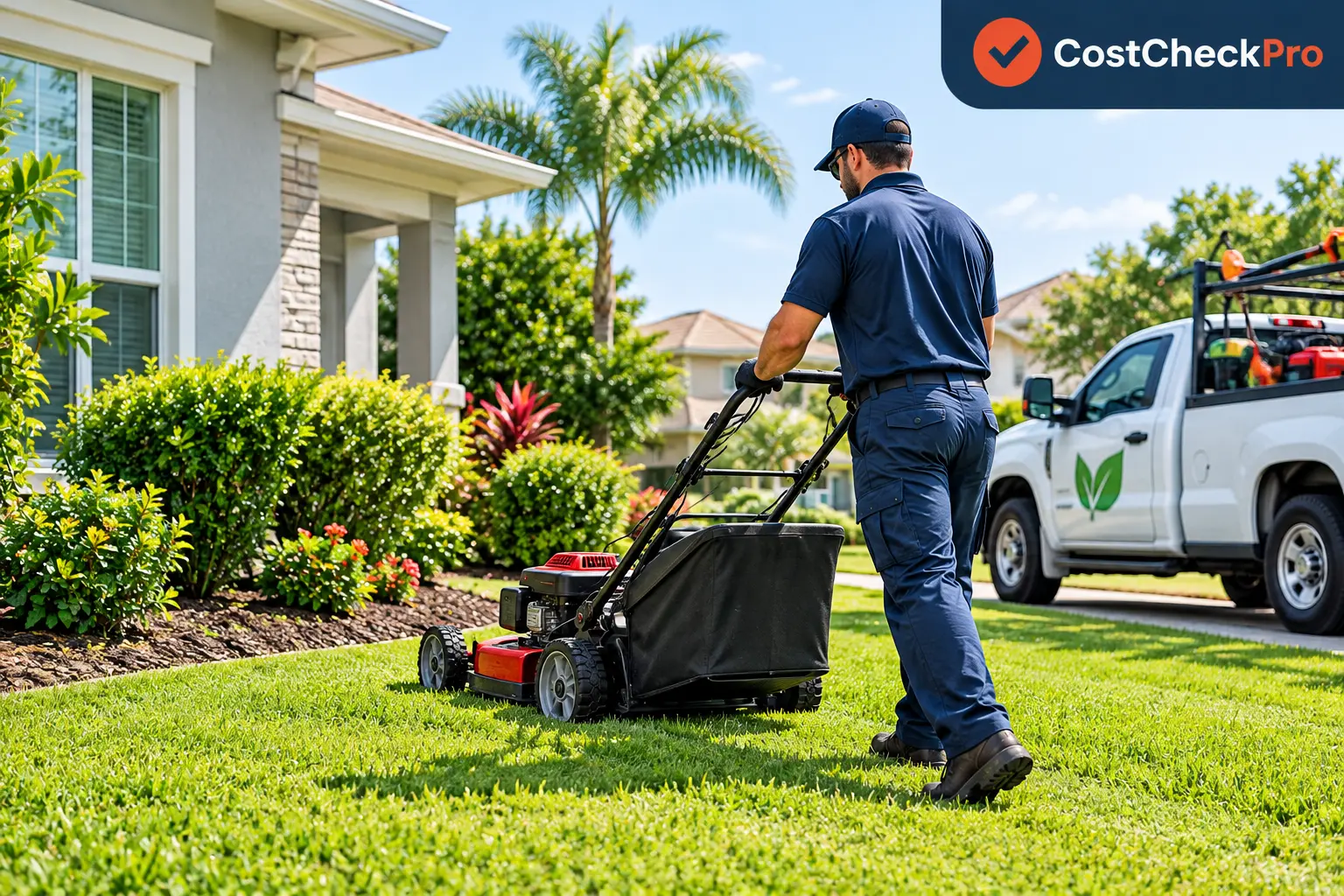
Most homeowners pay $35–$80 per visit for lawns under 10,000 sq. ft., or roughly $130–$350 per month on a biweekly schedule. Larger lots and sloped terrain push costs higher. Try the lawn care calculator with your exact lawn size.
Two homes on the same street, with lawns that look about the same size, can end up with mowing quotes that differ by $20–$30 a visit. That's usually not a pricing inconsistency — it's a sign that one of a handful of specific factors is different between the two properties.
What "lawn size" actually means to a mowing company
Pricing is based on the actual mowable square footage, not the size of the lot. A 10,000 sq. ft. lot with a large driveway, deck and garden beds might only have 6,000 sq. ft. of grass to cut — and should be priced closer to that number, not the lot size on the property listing.
| Lawn size | Price per visit | Typical frequency |
|---|---|---|
| Under 5,000 sq ft | $35 – $55 | Weekly / biweekly |
| 5,000 – 10,000 sq ft | $55 – $80 | Weekly / biweekly |
| 10,000 – 20,000 sq ft | $80 – $120 | Weekly / biweekly |
| Over 20,000 sq ft | $120 – $220 | Weekly / biweekly |
Why frequency changes the per-visit price, not just the total
A lawn mowed weekly is cut shorter and more evenly each time, which is faster work per visit. A lawn mowed monthly has grown considerably taller between visits, which means slower mowing, more clippings to manage, and sometimes a double-cut to avoid scalping — all of which can make each individual monthly visit cost more than a single weekly one, even though the monthly total is lower.
What's usually included versus billed separately
- Usually included: mowing, basic edging along hard surfaces, blowing clippings off driveways and walkways.
- Usually separate: fertilization, weed control, aeration, mulching, and bed edging around landscaping.
- Often a surprise add-on: steep slopes, extensive obstacles (trees, play equipment, garden beds) and gated access that slows the crew down.
A quick way to sanity-check a quote
If your lawn is roughly 7,000 sq. ft. and reasonably flat, a biweekly quote in the $55–$80 per-visit range is in line with national averages. A quote significantly above that is worth asking about — it may include add-ons you didn't request, or reflect access difficulty that isn't obvious from the street.
How lawn care costs shift by climate
Lawn care is one of the few home services where climate affects the total bill more than labor rates do — because climate determines how many times a year your lawn actually needs mowing.
| Region | Typical mowing season | Annual visits (weekly service) |
|---|---|---|
| South / Florida / Gulf Coast | Nearly year-round | 40-48 visits |
| West Coast | 9-10 months | 32-40 visits |
| Midwest / Northeast | April through October | 26-30 visits |
| Mountain / Northern states | May through September | 18-22 visits |
This is why two homeowners with identical per-visit rates can have dramatically different annual lawn care budgets — the Florida homeowner is simply paying for more total visits across the year.
What's actually done during a standard mowing visit
- Mowing. Grass is cut to a consistent height, typically following the "one-third rule" — never removing more than a third of the blade length in one cut.
- Edging. A clean line is trimmed along driveways, sidewalks and garden beds.
- Trimming. A string trimmer handles areas the mower can't reach — around trees, fences and obstacles.
- Blowing. Clippings and debris are cleared off hard surfaces so the property looks finished, not just mowed.
Anything beyond this — fertilizing, weed treatment, mulching, bed maintenance — is almost always a separate line item, even when a company bundles it into a seasonal package.
How to compare two lawn care quotes fairly
A $45 quote and a $70 quote for the "same" lawn aren't always comparable on price alone. Before deciding, check:
- Is the measured lawn size the same? Some companies estimate from a quick look; others measure from satellite imagery or an on-site walk, and the numbers can differ.
- Does the price include edging and blowing, or just mowing? A bare mowing-only price looks cheaper but may cost more once the add-ons you actually want are included.
- Is it a flat rate or does it change with grass height? Some companies charge extra if grass has grown unusually long between visits — worth asking about before the first missed week becomes a surprise fee.
Seasonal considerations that affect the bill
Spring startup often costs more than a regular visit, since the first cut of the season typically deals with longer, denser growth than a routine weekly mow. Many companies charge a one-time "initial cleanup" fee for this first visit. On the other end of the season, fall cleanup (leaves, final cuts before dormancy) is also commonly priced separately from the regular mowing rate, even for customers on a seasonal contract.
Lawn care add-on services and typical pricing
Once mowing is covered, most homeowners eventually consider one or more add-on services. Here's what they typically cost on top of a standard mowing plan:
| Service | Typical cost | How often needed |
|---|---|---|
| Core aeration | $75 – $225 | 1-2 times per year |
| Overseeding | $100 – $300 | Annually, often paired with aeration |
| Weed control treatment | $50 – $100 per visit | 4-6 rounds per season |
| Mulching (per bed) | $3 – $6 per sq. ft. | Annually or biannually |
| Grub control | $50 – $100 | Once per season, if needed |
| Fall leaf cleanup | $150 – $400 per visit | 1-3 visits in autumn |
DIY lawn care vs. hiring a professional
A basic push mower and a few hours a week is clearly cheaper upfront than a mowing contract — but the full comparison depends on factors beyond just the mower.
- Equipment cost. A reliable push mower runs $300-$600; a riding mower for larger lots runs $1,500-$4,000+, plus ongoing maintenance, gas or battery costs, and storage space.
- Time. A typical suburban lawn takes 30-60 minutes to mow; add edging and trimming and it's closer to 90 minutes weekly during peak season.
- Results consistency. Professional crews maintain consistent mowing height and timing, which matters more for lawn health than most homeowners realize — inconsistent cutting height is one of the most common causes of a patchy, stressed lawn.
- Physical demands. For larger lots or homeowners with mobility limitations, the labor itself is often the deciding factor regardless of cost.
For a small, flat lawn under about 5,000 sq. ft., DIY mowing is often genuinely cost-effective. Past that size, or with a sloped or obstacle-heavy yard, the time cost starts to outweigh the savings for most people.
How to choose a lawn care company
- Ask about equipment maintenance. Dull mower blades tear grass instead of cutting it cleanly, which leaves a ragged, brownish look within a day or two — a sign of a company cutting corners on upkeep.
- Check for licensing on chemical applications. Fertilizer and weed control treatments often require state pesticide applicator licensing — worth confirming if you're bundling those services.
- Ask what happens in bad weather. A reliable company has a clear rain policy (same-day reschedule vs. next available slot) rather than leaving your lawn unmowed for two weeks after a rainy stretch.
- Read the contract terms before signing a seasonal plan. Some seasonal contracts auto-renew or require a cancellation notice period — details worth knowing upfront.
Understanding common lawn care contract terms
Seasonal lawn care agreements often use language that's easy to skim past. A few terms worth clarifying before signing:
- "Per-cut" vs. "flat seasonal rate": Per-cut billing charges for each actual visit; flat seasonal rates average the cost across the season regardless of how many cuts occur in a given month.
- "Weather skip" policy: Defines whether a skipped week due to rain is billed, made up, or simply absorbed into the schedule.
- Auto-renewal clauses: Many annual contracts renew automatically unless cancelled within a specific window — worth marking on a calendar if you don't want it to continue automatically.
Add-on services and what they typically cost
Once mowing is handled, most lawn care companies offer a menu of add-ons priced separately. Knowing the typical range helps you tell a fair upsell from an inflated one:
| Add-on service | Typical cost |
|---|---|
| Aeration (per visit) | $75 – $200 |
| Overseeding (per visit) | $100 – $300 |
| Mulching (per cubic yard installed) | $40 – $90 |
| Weed control (per application) | $40 – $75 |
| Grub control treatment | $50 – $100 |
How to vet a lawn care company before hiring
- Ask about insurance. Legitimate lawn care businesses carry general liability insurance in case equipment damages your property.
- Check for a written estimate. A company that won't put the lawn size, frequency and price in writing is harder to hold to the original quote.
- Ask what happens after a missed visit. Rain delays happen — ask whether the next visit is at standard price or a "overgrown lawn" surcharge applies.
- Read recent reviews, not just the overall rating. A 4.5-star average can still hide a pattern of billing complaints in the most recent reviews specifically.
How to measure your own lawn before calling
You don't need professional equipment to get a reasonably accurate lawn size estimate before requesting quotes:
- Walk the perimeter in large rectangles. Break irregular yards into a few rough rectangles and triangles rather than trying to measure the whole shape at once.
- Measure length and width in paces or a tape measure. An average adult pace is roughly 2.5 feet — multiply paces by 2.5 for a rough footage.
- Multiply length by width for each section, then add them together. This gives total square footage across the whole property.
- Subtract hardscape. Don't forget to subtract the driveway, patio, pool and garden beds — companies price mowable grass area, not total lot size.
Many free satellite measurement tools (including Google Maps' measuring feature) can also give a rough estimate if you'd rather not walk the yard.
What a full year of lawn care actually costs
Putting the pieces together, a 7,000 sq. ft. lawn on biweekly service in a moderate climate (roughly 26 visits a year) at $60 per visit runs about $1,560 annually for mowing alone. Add a basic fertilization program (4 applications at $60 each, $240/year) and one fall cleanup ($150), and a realistic full-service annual budget lands closer to $1,950 — useful context when a seasonal package quote arrives and the total feels higher than the advertised "per visit" rate alone would suggest.
Signs a lawn care quote is too high
Without a baseline, it's hard to know if a quote is fair. A few patterns suggest a price is padded rather than justified by real site conditions:
- A flat "estate rate" regardless of measured size. Pricing should scale with square footage — a company unwilling to measure or explain the basis for a number is a yellow flag.
- Mandatory bundling. Being told mowing is "only available" with a full-season contract, rather than offered as a standalone option, often signals an upsell-driven pricing model.
- Vague add-on pricing. A company that can't give even a rough per-application price for fertilization or weed control before the first visit is harder to budget against later.
None of these automatically mean a company is overcharging — some genuinely only do full-service contracts — but they're worth asking about directly before committing.
Regional pricing examples
To make the national averages more concrete, here's roughly what a 6,000-8,000 sq. ft. lawn on biweekly service tends to run in a few representative markets: a mid-size Midwest city often lands around $55-$70 per visit; a major Southeast metro, where mowing season runs longer and competition among providers is high, often comes in similar or slightly lower per visit despite more total annual visits; and higher cost-of-living West Coast metros frequently run $75-$95 per visit for the same size lawn, reflecting both labor costs and land values in those markets.
Cool-season vs. warm-season grass and what it means for cost
Grass type affects not just how your lawn looks, but how it's priced and maintained through the year:
- Warm-season grasses (Bermuda, St. Augustine, Zoysia, common across the South) grow most aggressively in hot months and go dormant — turning brown but not dead — in winter, meaning mowing demand concentrates heavily into summer.
- Cool-season grasses (Kentucky bluegrass, fescue, ryegrass, common in the North and transition zone) grow fastest in spring and fall, slow down in peak summer heat, and need consistent mowing across a longer stretch of the calendar rather than one intense season.
This is part of why a flat "weekly service" quote can mean a very different annual visit count depending on grass type and region, even at the same stated frequency — a warm-season lawn's "weekly" service might effectively pause for a few winter months, while a cool-season lawn's rarely does.
What happens if you skip a season
Pausing lawn care for a season — common during a move, financial tight spot, or simply deciding to DIY for a while — isn't free to undo. Returning after months of neglect typically means the first visit back costs more than a standard mow, since overgrown grass, embedded weeds and sometimes small woody growth need to be cleared before the lawn is back to a maintainable baseline. Some companies price this as a flat "lawn restoration" fee rather than their standard rate; others simply charge double or triple the normal visit price for the first cleanup. Budgeting for this catch-up cost — rather than assuming service can restart at the regular rate — avoids an unpleasant surprise on the first bill back.