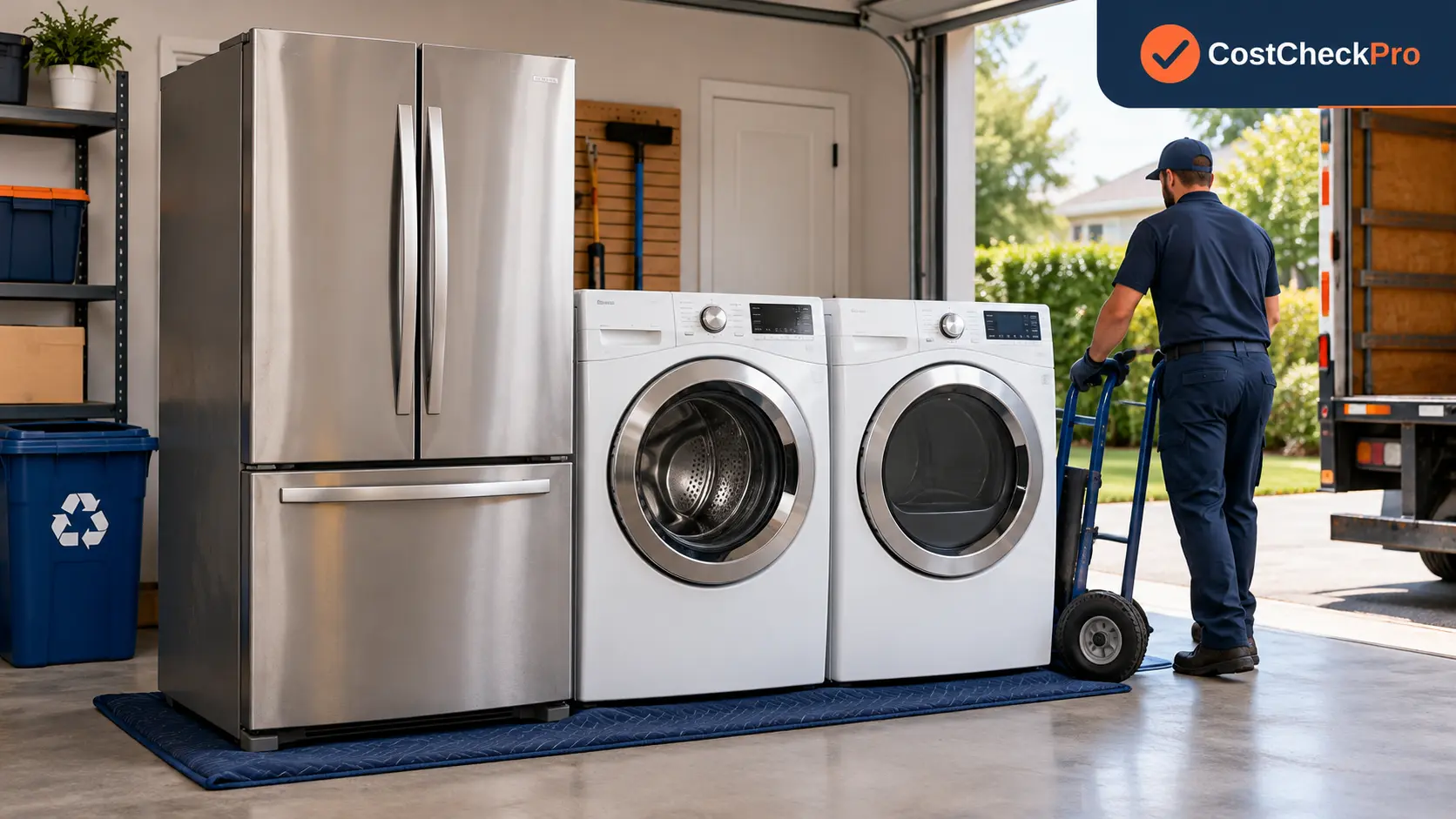
Most single appliances cost $75–$175 to remove, with refrigerators and freezers landing at the higher end due to required refrigerant handling. Bundling several old appliances together usually lowers the per-item cost.
Old appliances are heavy, awkward to move, and in the case of refrigerators, legally require special handling — which is why they're priced a little differently than general junk.
Cost by appliance type
| Appliance | Typical cost | Why |
|---|---|---|
| Refrigerator / freezer | $100 – $175 | Refrigerant must be legally recovered before disposal |
| Washer or dryer | $75 – $140 | Heavy but no special handling required |
| Dishwasher | $65 – $120 | Smaller and lighter than laundry appliances |
| Stove / oven | $75 – $140 | Weight and awkward shape add labor time |
The refrigerant rule that affects pricing
Under EPA regulations, refrigerant (like Freon) in refrigerators and freezers must be professionally recovered before the unit can be scrapped. Legitimate junk removal companies factor this certified recovery step into the price — which is the main reason fridges cost more than similarly sized appliances.
Bundling saves money
If you're replacing a kitchen's worth of appliances at once, ask for a bundled quote rather than booking each pickup separately. Most companies will quote the group as a single small load, which is usually cheaper than four individual single-item fees.
Check for a retailer haul-away option first
Many large retailers offer free haul-away of your old appliance when they deliver a new one — worth checking before paying for separate removal.
What happens to appliances after pickup
Most appliances don't go straight to a landfill — scrap metal recyclers actively seek out appliances for their steel, copper and aluminum content, which means a responsible junk removal company typically routes appliances to a metal recycler rather than disposal. This is also why some scrap yards accept appliances directly from homeowners for a small payment rather than a fee, though in practice few homeowners have a truck and the ability to transport a heavy appliance themselves, which is where a paid pickup service earns its cost through convenience and labor rather than true disposal difficulty.
Appliance disposal rules by state
Several states have specific regulations around appliance disposal beyond the federal refrigerant rule, particularly for items containing mercury switches (some older models) or other regulated materials. California, for example, has additional e-waste and appliance recycling fees built into the retail price of new appliances specifically to fund proper disposal infrastructure. A legitimate junk removal or appliance recycling company will already be compliant with state-specific rules, but it's worth a quick check of your state's environmental agency website if you're disposing of an unusually old appliance (pre-1990s units are more likely to contain now-regulated materials).
DIY appliance disposal options
- Municipal appliance recycling programs. Many cities offer scheduled or on-demand appliance pickup separate from regular bulk trash, sometimes free or low-cost, specifically because of the recyclable metal content.
- Scrap metal yards. If you have a truck and the ability to load a heavy appliance, some scrap yards pay a small amount per appliance based on current metal prices — rarely enough to be worth the effort alone, but a nice offset if you're already making a scrap run for other items.
- Manufacturer take-back programs. Some appliance manufacturers offer recycling programs for their own branded products, occasionally with a rebate incentive on a new purchase.
For a single appliance with reasonable DIY transport options, these alternatives can eliminate the disposal cost entirely. For multiple appliances, awkward access, or simply not having a vehicle suited to the job, paid pickup remains the more practical choice for most homeowners.
Appliance age and disposal cost
Older appliances, particularly pre-1990s refrigerators, sometimes carry a higher disposal cost due to outdated refrigerant types (like R-12) that require different, sometimes more specialized recovery procedures than modern refrigerants. If you're disposing of an appliance inherited with an older home or from an estate cleanout, mentioning its approximate age when requesting a quote helps ensure accurate pricing rather than a surprise adjustment once the crew identifies an older refrigerant type on arrival.
Combining appliance disposal with a kitchen renovation
Kitchen renovations often generate appliance disposal needs alongside general demolition debris — old cabinets, countertops and flooring. Rather than booking separate pickups, most junk removal companies can handle both in one visit, treating the appliances as part of the overall renovation debris load rather than a separate single-item charge each. This bundling is typically more cost-effective than scheduling appliance removal as its own appointment before or after the general demolition cleanup.
A note on appliance repair vs. replacement economics
Before committing to disposal, it's worth a quick gut-check on repair cost versus replacement, since this affects whether disposal is even the right next step. A general rule many appliance technicians use: if a repair costs more than 50% of a comparable new unit's price, replacement usually makes more financial sense — at which point disposal of the old unit becomes part of the overall project cost alongside the new purchase.
Freezer and secondary refrigerator disposal
Garage and basement secondary refrigerators and standalone freezers follow the same refrigerant-recovery rules and pricing patterns as a primary kitchen fridge, typically $100-$175. A detail that sometimes surprises homeowners: a chest freezer, despite being lower to the ground and seemingly easier to move, can actually be harder to maneuver out of a basement or garage due to its length and the tight turns often involved in basement stairwells, which occasionally adds an access surcharge similar to what applies to furniture in difficult-access situations.
Washer and dryer disposal: individually or as a pair
Washers and dryers are almost always disposed of together, since they're typically replaced as a set and located in the same space. Most companies price a washer-dryer pair as a bundled single-item-plus rate rather than two full separate charges, often landing around $120-$200 for the pair rather than $150-$280 if priced as two fully separate pickups. Stackable units (common in apartments and smaller homes) sometimes require extra disassembly time if they're installed in a built-in closet configuration, which can modestly affect the final price compared to a standard side-by-side set.
Dishwasher disposal specifics
Built-in dishwashers require disconnection from water, drain and electrical lines before removal — a step some junk removal companies don't perform themselves, instead asking that the unit already be disconnected by a plumber or handyman before pickup day. It's worth clarifying this upfront, since showing up to a still-connected dishwasher can mean a wasted trip or an on-the-spot disconnection fee if the crew is willing and equipped to handle it. Freestanding or portable dishwashers avoid this complication entirely, typically landing at the lower end of the standard pricing range.
Oven and range disposal: gas vs. electric considerations
Electric ranges are generally straightforward to disconnect and remove, similar to other major appliances. Gas ranges require the gas line to be properly shut off and capped before removal — a safety step that should be handled by a qualified technician if it hasn't already been done, since most junk removal crews aren't licensed to work on gas lines themselves. As with dishwashers, confirming disconnection status before the scheduled pickup avoids delays or added fees on the day of service.
Commercial and multi-unit appliance disposal
Property managers and landlords dealing with appliance turnover across multiple rental units often negotiate volume pricing with junk removal or scrap companies for recurring disposal needs — a different arrangement than the one-time single-household pricing covered throughout this guide. If you're managing appliance disposal across several units or properties on an ongoing basis, it's worth asking local companies directly about a standing account or volume discount rather than booking each unit's disposal as a separate one-off job.
Environmental impact of proper appliance disposal
Beyond the refrigerant recovery already discussed, appliances contain meaningful amounts of recoverable steel, copper and aluminum — materials that, when properly recycled rather than landfilled, reduce the need for new raw material extraction. A single refrigerator can contain enough recoverable steel to offset a measurable amount of new mining activity when processed through a legitimate metal recycling stream. This is part of why many municipalities specifically incentivize or mandate appliance recycling separate from general bulk trash, and why most of the disposal fee homeowners pay is genuinely funding proper handling rather than simply covering a dump fee.
How to prepare an appliance for pickup
- Empty it completely. Refrigerators and freezers should be fully emptied and, ideally, defrosted a day ahead if they've accumulated ice buildup, which otherwise adds unexpected weight and mess during transport.
- Disconnect what you safely can. Unplugging is always safe and expected; water lines and gas lines should only be disconnected by someone comfortable and qualified to do so.
- Clear a path. The same access principles that apply to furniture removal apply here — appliances are heavy and awkward, and a clear path significantly speeds up the job.
- Secure doors if needed. Taping refrigerator or freezer doors shut prevents them from swinging open during the carry, a small step that reduces risk of damage to walls or doorframes along the way.
Appliance disposal cost in apartments vs. houses
Apartment and condo appliance disposal sometimes carries a modest premium over single-family home pickup, driven by access factors that don't apply to most houses: elevator scheduling and reservation requirements, longer hallway carries, and building management coordination (some buildings require advance notice or a certificate of insurance from the removal company before allowing access). Renters should also confirm with building management or a lease agreement whether appliance disposal responsibilities fall to the tenant or the property — in many cases, appliances are considered part of the unit and disposal coordination should go through the landlord or property manager rather than being arranged independently.
Common questions about combining appliance pickup with other junk
Appliances can almost always be combined into a larger junk removal load alongside furniture, boxes, or general household items in a single visit, and doing so is typically more cost-effective than booking a dedicated appliance-only pickup separately. The appliance's disposal fee (covering refrigerant recovery for a fridge or freezer, for example) still applies as a line item, but the general labor and base load cost is shared across everything being removed in that visit rather than charged per trip.
What a fair appliance disposal quote looks like
A transparent quote should separate the base removal/labor fee from any item-specific disposal fee (like refrigerant recovery), rather than bundling everything into one opaque number. This matters most when comparing quotes between companies — one company's "$150 flat" might already include everything, while another's "$100 plus fees" could land at a similar or higher final total once the refrigerant fee is added. Asking for the full breakdown before booking avoids comparing quotes that aren't actually structured the same way.
Timing appliance disposal around a new delivery
If a new appliance delivery is already scheduled and includes haul-away, confirm the exact scope before also booking a separate junk removal service — doubling up unnecessarily is a common, avoidable cost. If haul-away isn't included or doesn't cover a second unit (some deliveries only remove the one appliance being replaced, not a separate unit you're also disposing of), scheduling the junk removal pickup for the same day or the day after delivery avoids having two bulky appliances sitting in the home at once, which is both an inconvenience and, in tight spaces, a genuine safety hazard.