Most homeowners don't think about their roof until something goes wrong. A stain on the ceiling. A missing shingle after a windy night. A home inspector's report that mentions "aging roof" without saying much else. The honest answer to how long a roof lasts isn't one number. It depends almost entirely on what the roof is made of and how it's been treated since the day it went on.
The short answer
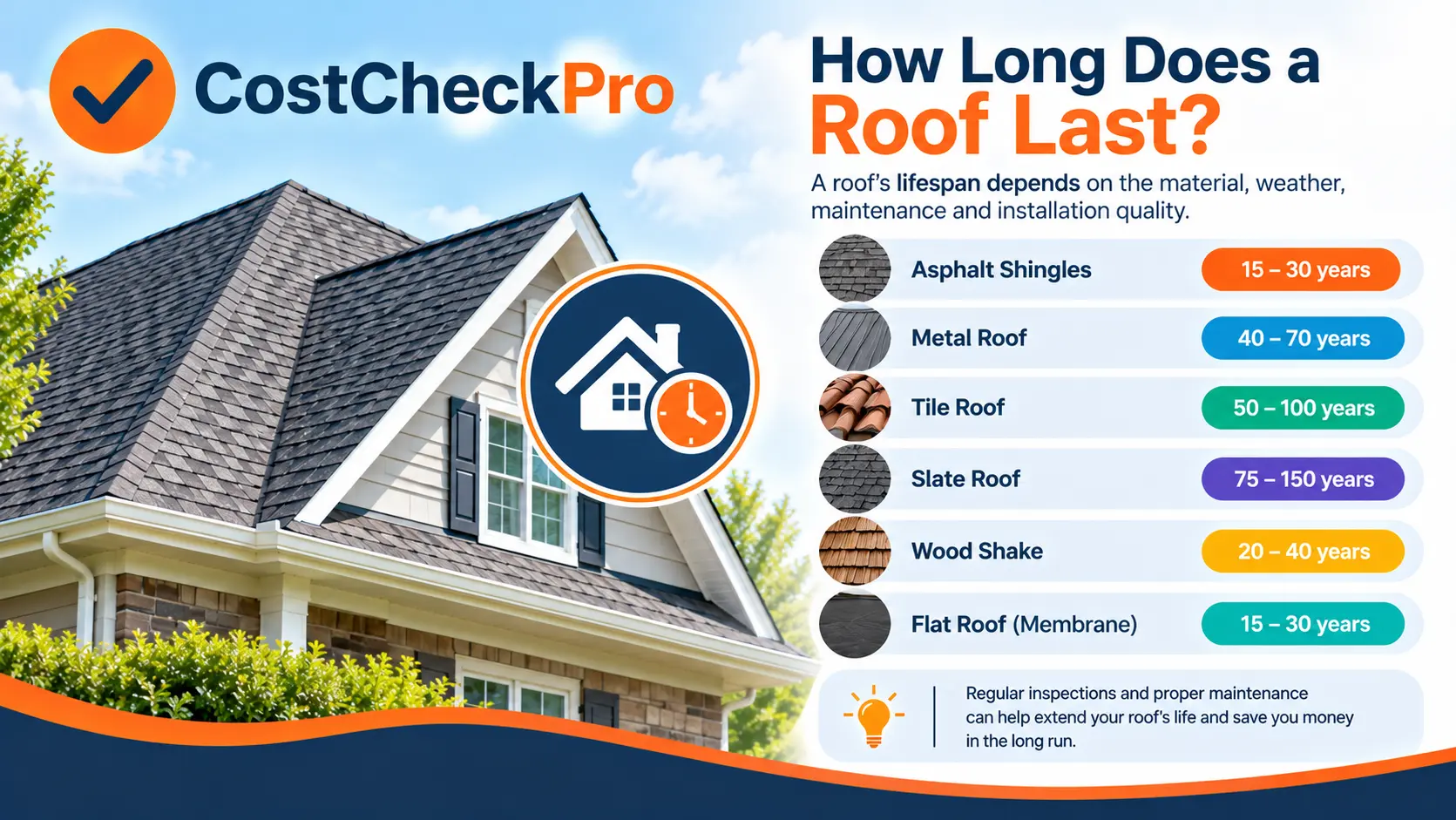
Asphalt shingle roofs last 15 to 30 years. Metal roofs last 40 to 70 years. Tile and slate can outlast the house itself at 50 to 100+ years. Wood shake sits in the middle at 20 to 40 years. These numbers assume decent installation and a climate that isn't actively working against the material. Push any of those assumptions and the real number can shift by a decade in either direction.
Lifespan by material
| Roofing material | Typical lifespan |
|---|---|
| 3-tab asphalt shingles | 15 – 20 years |
| Architectural asphalt shingles | 25 – 30 years |
| Standing seam metal | 50 – 70 years |
| Corrugated metal | 30 – 45 years |
| Clay or concrete tile | 50 – 100 years |
| Natural slate | 75 – 150 years |
| Wood shake or shingle | 20 – 40 years |
| Flat roof (TPO/EPDM) | 20 – 30 years |
Why asphalt shingles are the ones that fail first
Asphalt is petroleum-based. Sun exposure slowly bakes the oils out of it, and once those oils are gone, the shingle gets brittle and starts to crack. This is called UV degradation, and it's the single biggest reason a shingle roof in Arizona or Florida wears out faster than the same shingle roof in Washington or Maine. Granule loss is the visible sign of this happening. Those small colored granules on top of a shingle block UV rays and give the shingle its color. When you start seeing bare, shiny patches, or find granules collecting in your gutters, the clock on that roof is running faster than the warranty sticker suggests.
What actually determines your roof's real lifespan
Installation quality
A roof is only as good as the crew that put it on. Nail placement matters more than most homeowners realize. A nail driven too high misses the reinforcement strip and can work its way loose within a few years. Too many nails per shingle, or nails driven at an angle, create small entry points for water that won't show up as a leak until the damage underneath has already spread. This is one reason two roofs of the identical material, installed a year apart by different crews, can age at completely different rates.
Attic ventilation
Heat gets trapped in a poorly ventilated attic and that heat radiates straight up into the underside of the roof deck. In summer this bakes the shingles from below at the same time the sun is baking them from above. In winter a warm, poorly vented attic melts snow on the roof, which refreezes at the colder eaves and creates ice dams that force water back up under the shingles. Proper intake and exhaust ventilation is one of the cheapest things a homeowner can fix and one of the biggest factors in whether a 30-year shingle actually reaches 30 years.
Roof pitch
Water and debris sit longer on a low-slope roof than a steep one. That extra dwell time means more moisture contact, more freeze-thaw cycling in cold climates, and more opportunity for algae and moss to take hold. A steep roof sheds water fast and generally ages slower, all else being equal.
Climate
Hail dents and bruises shingles even when it doesn't puncture them, and bruised shingles lose their waterproofing ability over time even though they might look fine from the ground. Coastal salt air corrodes metal fasteners and flashing faster than inland air does. Heavy, wet snow adds structural load winter after winter. None of these show up on a lifespan chart, but all of them quietly shorten the number.
Maintenance history
A roof that's had its gutters cleaned, its flashing recaulked, and its damaged shingles replaced promptly after storms will consistently outlast an identical roof that's been left alone for twenty years. Small deferred repairs compound. A single missing shingle left unfixed lets water reach the underlayment, and from there it reaches the decking, and from there you're looking at a repair bill that's an order of magnitude bigger than the one you skipped.
Signs your roof is nearing the end, regardless of its age
- Shingles curling at the edges or cupping in the middle — a sign the asphalt has lost its flexibility.
- Dark streaks — usually algae, cosmetic more than structural, but a sign the roof is holding moisture longer than it should.
- Daylight visible through the attic roof boards — a serious sign of gaps that need immediate attention.
- A roof deck that feels spongy underfoot — indicates water has already reached and softened the wood below the shingles.
- Granules filling your gutters after every rain — the protective layer is washing away faster than normal wear would explain.
Any one of these can show up on a roof that's technically still "within" its expected lifespan. Age on paper and actual condition are two different questions, and the second one matters more when you're deciding whether to repair or replace.
How manufacturer warranties relate to real lifespan
A 30-year shingle warranty does not mean the shingle is guaranteed to last 30 years. It means the manufacturer will prorate a replacement if the product fails due to a material defect within that window, and most warranties shrink in value every year that passes, often covering only a small fraction of replacement cost by year 20. Installation errors, which cause a large share of early roof failures, usually aren't covered by the material warranty at all. That's a separate workmanship warranty from the contractor, and it's typically much shorter, often just two to ten years.
Repair or replace: a practical way to decide
If the roof is under 10 years old and the damage is isolated to one area, repair almost always makes sense. If the roof is past 70 to 80 percent of its expected lifespan and you're looking at a repair that costs more than 30 percent of a full replacement, replacement is usually the better financial move, since you'd likely be back for another repair within a few years anyway. A roofing contractor can give you a straight answer after a physical inspection, but running your numbers through our roof replacement cost calculator first gives you a budget range to compare that advice against.
Regional lifespan differences worth knowing
A shingle roof in the desert Southwest can lose five to ten years off its expected life purely from intense, year-round UV exposure. The same roof in a humid Gulf Coast climate faces a different threat: algae and moss growth that holds moisture against the shingle surface. Northern climates bring freeze-thaw cycling, where water seeps into tiny cracks, freezes, expands, and widens the crack a little more each winter. None of this means a given material is a bad choice in a given region. It means the lower end of the lifespan range is the more realistic number to plan around if you live somewhere with one of these accelerating factors.
Does roof color affect how long it lasts?
Slightly, yes. Darker shingles absorb more heat, which can modestly accelerate the UV degradation process compared to a lighter color in a hot, sunny climate. The difference isn't large enough to be the deciding factor in choosing a color, but in places like Arizona or South Florida, homeowners sometimes choose lighter shingle colors specifically to shave a bit of extra heat stress off the roof's lifespan, alongside the cooling-cost benefit of a more reflective surface.
Flat and low-slope roofs: a different lifespan conversation
Flat roofing systems like TPO, EPDM rubber, and modified bitumen follow a shorter timeline than sloped shingle or metal roofs, typically landing in the 20 to 30 year range, and they're more sensitive to standing water than any sloped material. Even a slight drainage problem on a flat roof can cut years off its life, since standing water accelerates membrane breakdown in a way that simply doesn't happen on a roof built to shed water quickly. Regular inspection of drains and seams matters more on a flat roof than almost any other maintenance task a homeowner can do.
How often you should actually inspect your roof
Twice a year is the standard recommendation: once in spring to check for winter damage, once in fall to clear debris before winter arrives. After any major storm, hail event, or high wind day, an extra look is worth the ten minutes it takes, even if nothing seems obviously wrong from the ground. Binoculars from the yard catch most visible problems without the risk of climbing up yourself, and a professional inspection every few years catches the issues that aren't visible from below at all, like early flashing failure or subtle decking rot.
What extending a roof's life actually costs
Gutter cleaning twice a year runs a modest amount and prevents the water backup that rots fascia boards and drives moisture under the roof edge. Replacing a handful of damaged shingles after a storm, done promptly, costs a few hundred dollars and prevents a leak that could otherwise cost thousands in interior repair. Improving attic ventilation is a bigger project but often pays for itself through both a longer roof life and lower summer cooling bills. None of these come close to the cost of a full premature replacement, which is the real number maintenance is protecting you against.
What insurance companies consider "old" for a roof
Many insurers start asking harder questions about a roof once it passes 15 to 20 years, regardless of the material's actual rated lifespan. Some policies shift from full replacement cost coverage to actual cash value coverage once a roof crosses that age, which means a claim pays out based on the roof's depreciated worth rather than what a full replacement actually costs. A few insurers decline to renew a policy at all on a roof past a certain age without a recent inspection confirming its condition. This is worth knowing even if your roof still looks fine, since the insurance clock and the physical wear clock don't always move at the same pace.
Why two identical houses next door can need new roofs years apart
Picture two houses built by the same developer in the same year, same shingle brand, same crew doing the installation back to back. One gets a new roof at year 18. The other makes it to year 27. The difference almost never comes down to the shingle itself. It comes down to a tree overhanging one roof and dropping leaves into the valleys, or one attic with a bathroom fan vented straight into the attic space instead of outside, slowly cooking the decking with trapped humidity, or one homeowner who caught a small flashing leak early and the other who didn't notice until the ceiling stained. Lifespan tables describe the material. They don't describe your specific roof.
The role of the roof deck, not just the shingles on top
Homeowners tend to think about roof lifespan purely in terms of the visible material, but the plywood or OSB decking underneath has its own lifespan question entirely. Decking that stays dry can last as long as the house itself. Decking that's been slowly absorbing moisture from an undetected leak, poor ventilation, or ice dam backup can rot well before the shingles above it show any obvious sign of failure. This is part of why a roof replacement sometimes costs more than a homeowner expected: the contractor pulls off the old shingles and finds sections of decking that need replacing before new roofing can go on, a cost that no lifespan chart or online calculator can predict without an actual inspection.
Metal roofing's lifespan advantage, and its one real weak point
Metal roofing's long lifespan comes from the fact that it isn't degrading from UV exposure the way asphalt does, and it doesn't absorb water the way wood shake can. Its main vulnerability is the finish, not the metal itself. A quality paint or coating system can last several decades, but once that coating starts to fail, the bare metal underneath becomes more exposed to corrosion, particularly in coastal areas with salt air or industrial areas with airborne chemical exposure. Choosing a marine-grade coating in a coastal home, or simply repainting a metal roof once the finish starts chalking, is a relatively small cost that protects the much larger lifespan advantage the material already has going for it.
Does a roof's lifespan reset after a repair?
No, and this is a common point of confusion. Replacing a section of damaged shingles after a storm doesn't reset the clock on the rest of the roof, which continues aging on its original timeline. What a good repair does is prevent that one damaged area from causing secondary damage, like a leak that spreads to the decking, that would otherwise shorten the lifespan of the surrounding roof. Think of repairs as protecting the existing timeline rather than extending it, with the exception of a full re-roof, which genuinely does start a new clock.
How solar panels affect roof lifespan planning
Homeowners considering solar panels sometimes don't think about roof age until the installer brings it up, and it's worth thinking about earlier than that. Most solar installers recommend the roof have at least 10 to 15 years of remaining life before panels go on, since removing and reinstalling panels to replace an aging roof underneath is a significant added cost. If your roof is already past the midpoint of its expected lifespan and you're planning solar, it's often more cost-effective to replace the roof first, even a few years early, than to install panels now and face a removal-and-reinstall project a few years later.
A quick way to estimate where your specific roof stands
Start with your material's typical range from the table above, then adjust down for each accelerating factor that applies to your situation: intense sun exposure, poor attic ventilation, a low roof pitch, a history of deferred maintenance, or a harsh climate like frequent hail or heavy coastal salt air. Adjust up for excellent ventilation, a steep pitch, mild climate, and a documented maintenance history. Most roofs land somewhere in the middle of their material's range rather than at either extreme, but knowing which direction your specific roof leans is far more useful for planning than the generic number alone.
FAQs
How long does a roof last on average in the US?
Most US homes have asphalt shingle roofs, which average 20 to 25 years with normal maintenance. The exact number depends heavily on your climate, your attic ventilation, and how the roof was originally installed.
Can a roof last longer than its warranty?
Yes, often. A warranty is a manufacturer's liability window, not a hard expiration date. Plenty of well-maintained roofs in mild climates outlast their rated warranty by several years.
How do I know my roof's age if I didn't buy the house new?
Check your home inspection report from when you bought the house, ask the previous owner if you're still in contact, or look for a permit record with your city or county, since roof replacements usually require one.
Does a second layer of shingles shorten the roof's lifespan?
It can. An overlay traps more heat against the new shingles and makes it harder to spot decking problems underneath, both of which tend to pull the realistic lifespan toward the lower end of the range.
Is 15 years too soon to need a new roof?
Not necessarily, but it's worth an inspection rather than an assumption. A 15-year-old roof with poor ventilation or a harsh climate history can genuinely be near the end, while a well-maintained one in a mild climate might have another decade left.
Does the type of underlayment affect how long a roof lasts?
Yes. Synthetic underlayment generally outperforms older felt paper at resisting moisture, and a quality underlayment can meaningfully extend the life of the decking underneath even as the visible shingles eventually wear out on their own schedule.
Should I replace my roof before selling my house?
If it's within the last few years of its expected life, replacing it can be worth it for buyer confidence and inspection negotiations. If it still has a decade or more left, a seller's disclosure of its age and condition is usually enough, and the cost is better spent elsewhere.
Does trimming overhanging trees actually help a roof last longer?
Yes, more than most homeowners expect. Overhanging branches drop leaves and debris into valleys where they trap moisture, scrape shingles during wind, and give squirrels and other animals easy roof access. Keeping branches trimmed back a few feet from the roofline removes several of these problems at once for the cost of an occasional trim.
Can painting or coating an old roof extend its life?
On metal roofs, yes, a fresh protective coating can meaningfully extend service life once the original finish starts to fail. On asphalt shingles, coatings exist but are less commonly recommended, since they can sometimes trap moisture against an already-aging shingle rather than genuinely protecting it.
Why do two roofs with the same warranty length sometimes have different actual lifespans?
Warranty length reflects the manufacturer's confidence in the material under average conditions, not a prediction for your specific roof. Climate, ventilation, installation quality and maintenance all push the real number up or down from that baseline, which is why the same 30-year shingle can genuinely last 20 years on one house and 35 on another.