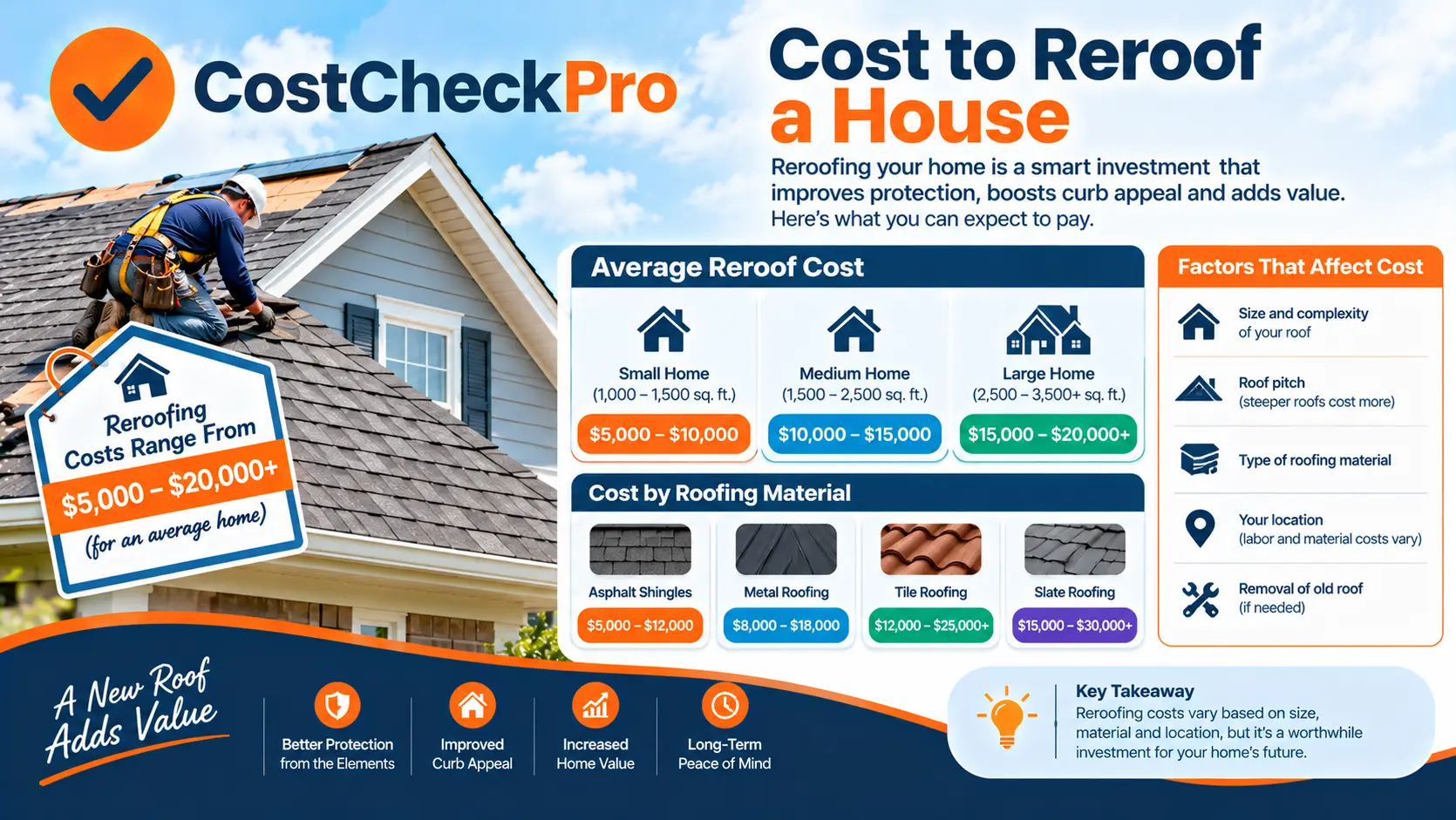
The cost to reroof a house typically runs between $5,500 and $22,000, with most homeowners landing somewhere around $9,500 to $14,000 for a standard asphalt shingle roof on an average-sized home. Where you fall in that range depends mainly on roofing material, the size and pitch of the roof, and how much work is needed before the new material goes on. Reroofing covers more ground than a quick patch job, so it helps to understand what's actually included before comparing quotes from different contractors.
What "reroofing" actually means
Reroofing can mean two different things depending on the contractor and the condition of the existing roof. One approach is a full tear-off, where the old roofing material is completely removed down to the wood deck, any damaged decking is replaced, and new underlayment and roofing material go on fresh. The other is an overlay, sometimes called a roof-over, where new shingles are installed directly on top of the existing layer without removing it first. Overlays cost less upfront but come with real trade-offs worth understanding before choosing that route to save money.
Average cost by roofing material
| Roofing material | Cost per square foot | Typical lifespan |
|---|---|---|
| 3-tab asphalt shingles | $3.50 – $5.50 | 15 – 20 years |
| Architectural asphalt shingles | $4.50 – $7.50 | 25 – 30 years |
| Metal roofing | $7 – $14 | 40 – 70 years |
| Wood shakes | $6 – $10 | 25 – 30 years |
| Clay or concrete tile | $8 – $18 | 50+ years |
| Slate | $15 – $25 | 75+ years |
For a more detailed material-by-material breakdown and a calculator that factors in your specific roof size, see our roofing cost calculator.
Full tear-off vs roofing over the old layer
A roof-over can save 20% to 30% on the total project, mainly by skipping tear-off labor and disposal fees, which makes it tempting for homeowners trying to keep costs down. The problem is it hides whatever condition the deck is in underneath, so any existing leaks, rot or moisture damage stay buried rather than getting fixed. Most roofing manufacturers also won't offer a full warranty on shingles installed over an existing layer, and many local building codes cap roofs at two layers total, meaning a roof-over isn't even an option if the home already has two layers of shingles on it from past work.
A full tear-off costs more upfront but gives the contractor a chance to inspect and repair the deck, correctly install new underlayment, and start with a roof that's warrantied the way the manufacturer intended. For most homeowners planning to stay in the house for years, the tear-off approach tends to be the better long-term value even with the higher initial price.
What affects the total cost beyond material
Roof pitch has a bigger effect on price than most people expect. A steep roof requires safety equipment, slows down the crew and sometimes limits how much material can be staged on the roof at once, all of which add labor hours. A simple, low-pitch roof on a ranch-style home costs noticeably less per square foot than a steep roof with multiple dormers and valleys on a similarly sized home.
Roof complexity matters almost as much as pitch. A simple rectangular roof with few penetrations installs faster than one with several chimneys, skylights, vents and valleys, since each of those features needs its own flashing work to stay watertight. More cuts and transitions also mean more waste material, which adds to the materials cost on top of the extra labor.
Deck condition is the wildcard that's hard to price until the old roof actually comes off. Rotted or water-damaged plywood sections need to be cut out and replaced before new roofing goes down, and this cost is usually quoted as a per-sheet add-on once the contractor can see what's underneath. Getting a written estimate that specifies a per-sheet rate for deck repair, rather than a vague allowance, avoids surprises on the final bill.
Tear-off and disposal fees typically add $1 to $3 per square foot on top of the new material cost, and this varies based on how many layers are coming off and local landfill or dumpster rental rates. If you're disposing of other debris from a larger home project at the same time, our junk removal cost calculator can estimate that separately.
Permits and code requirements
Most municipalities require a permit for a full reroof, and some also require an inspection once the work is complete. Permit costs are usually modest, often a few hundred dollars, but skipping this step to save money is a real risk, since an unpermitted roof can complicate a home sale later and may not be covered properly by insurance if something goes wrong. Established roofing contractors typically handle the permit application as part of their service, so it's worth confirming this is included rather than assumed.
How roof size is actually calculated
Roofing contractors measure in squares, with one square equal to 100 square feet of roof surface, not the footprint of the house itself. A roof's surface area is always larger than the home's floor plan because of the pitch, and a steeper roof has noticeably more surface area than a flatter one covering the same footprint. This is why two homes with identical floor plans can need very different amounts of roofing material if their pitch differs, which is part of why an accurate quote requires an actual measurement rather than a guess based on square footage of the house.
Seasonal timing and cost
Roofing demand tends to spike in late spring through early fall in most regions, which can mean higher prices and longer scheduling waits during peak season. Booking a reroof in late fall or winter, where weather allows, sometimes means more competitive pricing and faster availability, since contractors have fewer jobs competing for the same crew time. In storm-prone regions like Florida, demand spikes sharply after hurricane season, which is worth planning around if the roof isn't in urgent need of replacement right now.
Reroofing after storm damage
If the need for a new roof stems from hail, wind or fallen debris, homeowners insurance may cover some or all of the cost depending on the policy and documented cause of damage. This typically starts with a contractor inspection and photos, followed by an adjuster visit from the insurance company. Normal aging and wear generally isn't covered, so this route only applies when there's a specific damaging event behind the need for a new roof rather than the roof simply reaching the end of its expected lifespan.
Financing a reroofing project
Given the size of a typical reroofing bill, many homeowners look at financing rather than paying the full amount upfront, through options like a home equity loan, a personal loan, or financing offered directly through the roofing contractor. Each comes with different trade-offs in speed, interest rate and whether the loan is secured against the home. For a full breakdown of how these compare, see our guide on roof financing options.
Choosing a contractor for a reroofing project
Getting at least three written quotes is worth the extra time it takes, since pricing for the same job can vary significantly between contractors even in the same area. Each quote should clearly separate material cost, labor, tear-off and disposal, and any anticipated deck repair, rather than arriving as one lump number that's hard to compare apples to apples against another company's quote. Confirming licensing, insurance and a workmanship warranty separate from the manufacturer's material warranty also matters, since a cheap quote from an uninsured crew can end up costing far more if something goes wrong during or after installation. You can get free quotes through CostCheckPro to compare multiple local roofing contractors at once.
Signs it's time to reroof rather than repair
Shingles that are curling, cracking or missing granules in large sections, daylight visible through the roof boards in the attic, and leaks that keep returning in different spots after repairs are all signs a roof has reached the point where a full reroof makes more sense than another round of patching. A roof approaching or past its expected lifespan, even without an active leak yet, is also worth addressing proactively, since replacing it before a leak starts avoids the additional cost of repairing interior water damage on top of the roof itself.
Getting an accurate estimate for your home
Because roof size, pitch, material choice and deck condition all shift the final number, the ranges in this guide are a starting point rather than a firm quote. The most reliable way to get an accurate cost is a written estimate from a licensed roofing contractor who measures your specific roof in person and breaks out material, labor, tear-off and any anticipated repairs as separate line items.
Frequently Asked Questions
How long does it take to reroof an average house?
Most asphalt shingle reroofing projects take one to three days for an average-sized home, assuming good weather and no major deck repairs needed. Larger homes, steeper roofs, or materials like tile and slate that require more careful handling can extend the timeline to a week or more. Weather delays are common, since most roofing materials need to be installed in dry conditions, and a contractor may pause mid-project if rain moves in unexpectedly.
Can I reroof just one section of my house instead of the whole thing?
In some cases yes, particularly if the damage is isolated to one section like a garage addition with its own roofline. The challenge is matching the new material's color and style to the existing roof, since shingles fade over time and an exact match to older material isn't always possible. Many contractors recommend a full reroof once a significant portion needs replacement anyway, since the labor setup cost is similar whether doing a partial or full job, making the partial option less cost-effective than it might initially seem.
Is it cheaper to reroof in the off-season?
Often yes. Roofing demand is typically lower in late fall and winter in most regions, which can mean more competitive pricing and shorter wait times for scheduling compared to the busy spring and summer months. The trade-off is that weather conditions can be less predictable for outdoor work, so a project might face more delays even if the base pricing is better.
Do I need to be home during a reroofing project?
It's not strictly necessary once the project is underway, though most contractors like to do a walkthrough with the homeowner before starting and after completion to review the work. Being present for the initial inspection, where any deck damage gets identified, is useful so you're not surprised by an added repair cost after the fact. Pets should be kept away from the work area and yard during the project, since nails and debris are an unavoidable part of the process despite cleanup efforts.
What happens to the old roofing material after tear-off?
Most contractors haul old shingles and debris to a local landfill or recycling facility as part of the project cost, which is factored into the tear-off and disposal fee on your quote. Some areas have asphalt shingle recycling programs that repurpose the material into road paving, though availability varies significantly by region, so it's worth asking your contractor directly if sustainable disposal matters to you.
Will reroofing fix a leak I'm currently dealing with?
In most cases yes, assuming the leak is coming from the roofing system itself rather than a separate issue like a plumbing vent or siding problem. A full tear-off in particular gives the contractor a chance to find and address the actual source of the leak, including repairing any rotted decking, rather than installing new shingles over a problem that's still there underneath. It's worth pointing out the specific leak location to the contractor before work begins so they can pay close attention to that area during tear-off.
Related reading
Roofing cost calculator · Roof financing options · Junk removal cost calculator · Get free quotes