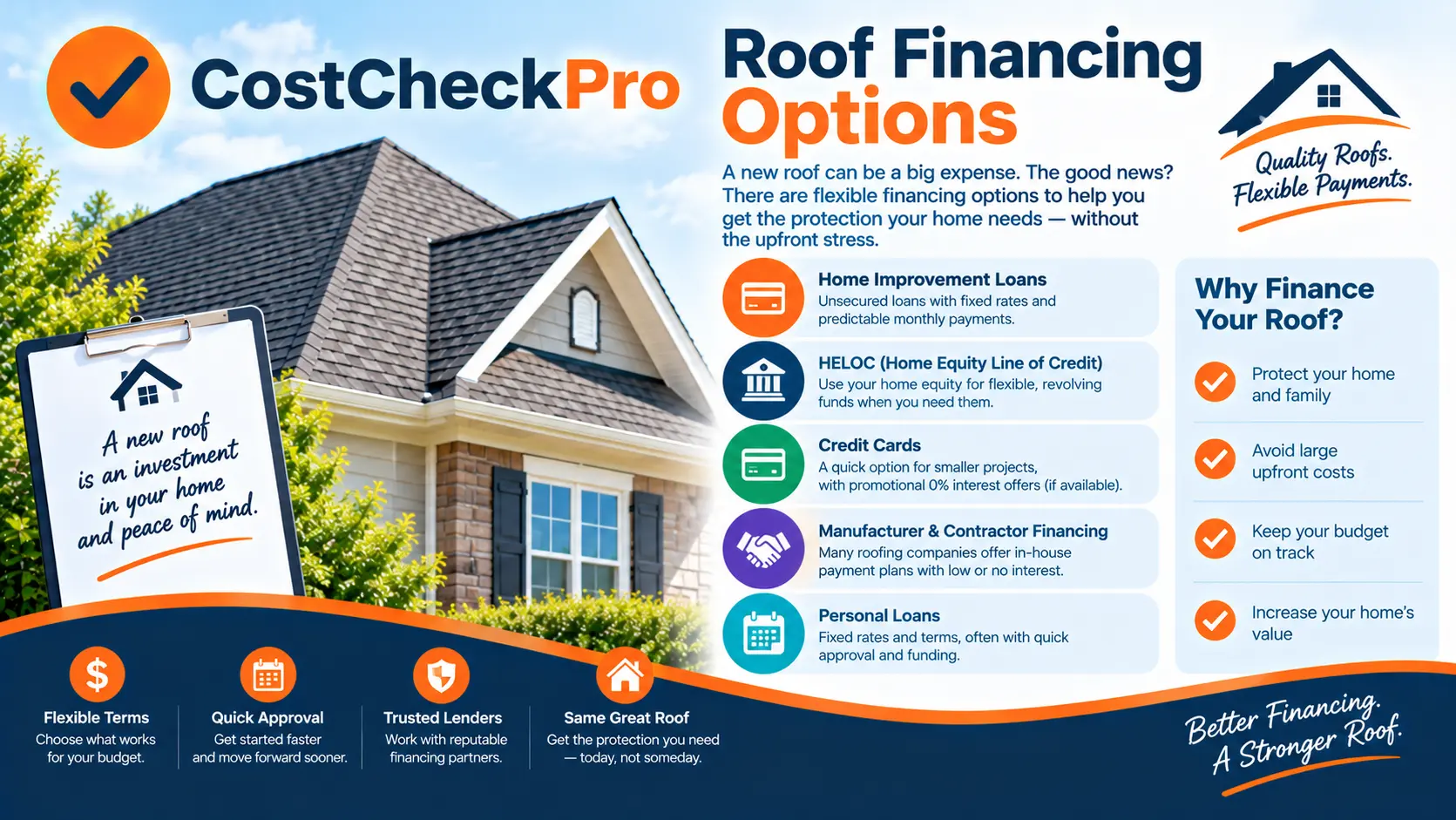
A full roof replacement is one of the bigger bills a homeowner runs into, often landing anywhere from $8,000 to $25,000 or more depending on the material and size of the roof. Few people have that kind of cash sitting around for a home repair, which is why roof financing has become such a common part of the conversation once a contractor hands over a quote. The good news is there are several realistic ways to pay for a roof over time instead of all at once, and each comes with its own trade-offs worth understanding before you sign anything.
Why roof financing matters more than people expect
A roof isn't optional the way a kitchen remodel is. Once a roof starts failing, water finds its way in, and delaying the work usually means the damage spreads to decking, insulation, drywall and sometimes the home's structure itself. That urgency is exactly why financing exists for this category of repair, and also why it's worth comparing a few options rather than accepting the first offer that comes from the roofing company itself. A rushed decision under pressure, especially after storm damage, is how homeowners end up with financing terms they wouldn't have picked with more time to think it through.
Home equity loans and HELOCs
For homeowners who've built up equity, a home equity loan or a home equity line of credit (HELOC) is usually the lowest-interest option available, since the loan is secured against the home itself. A home equity loan gives a lump sum with a fixed rate and fixed monthly payment, which makes budgeting simple. A HELOC works more like a credit card tied to your home's equity, letting you draw funds as needed, which can be useful if the roof project uncovers additional repairs partway through and the total cost shifts.
The trade-off is time and paperwork. Both options typically require an appraisal and a few weeks of processing, so they're a better fit for a planned replacement than an emergency leak that needs a contractor on the roof within days. There's also the obvious downside that your home is the collateral, so missed payments carry more weight than they would with an unsecured loan.
Personal loans
An unsecured personal loan from a bank, credit union or online lender is one of the faster routes to funding, often approved within a day or two with funds available shortly after. Because there's no collateral involved, interest rates run higher than a home equity loan, generally somewhere between 7% and 20% depending on credit history, but the simplicity and speed make this a popular choice for homeowners who need the work done quickly and don't want to tie the loan to their house.
Credit unions in particular are worth checking before going with a big national lender, since they often offer better rates to existing members than what shows up in a quick online search.
Contractor-offered financing
Many roofing companies now partner with third-party lenders to offer financing directly at the point of sale, sometimes with promotional terms like 0% interest for 12 or 18 months. This can be a genuinely good deal if you're confident you can pay it off within the promotional window, since the convenience of applying on the spot and getting a same-day answer is hard to beat.
The catch worth watching for is what happens after the promotional period ends. Some of these plans are structured as deferred interest, meaning if the balance isn't paid in full by the end of the promo window, interest gets charged retroactively on the entire original amount, not just what's left. Reading the fine print on this point before signing is worth the extra ten minutes, since it's the single most common way contractor financing ends up costing more than expected.
FHA Title I and 203(k) loans
For homeowners who don't have much equity built up yet, the FHA offers a couple of government-backed options worth knowing about. An FHA Title I loan can cover home improvements, including roofing, without requiring equity in the home, up to a set borrowing limit. The FHA 203(k) loan is more commonly used when buying or refinancing a home that needs repairs, rolling the renovation cost into the mortgage itself, which can include a roof replacement as part of a larger project.
These loans involve more paperwork and a longer approval process than a personal loan, so they tend to make more sense for homeowners planning ahead rather than dealing with an active leak.
Insurance claims
If the roof damage came from a covered event, like hail, wind or a fallen tree, a homeowners insurance claim may cover some or all of the replacement cost, which isn't financing in the traditional sense but is often the first thing worth checking before exploring a loan. The claims process usually starts with a contractor inspection documenting the cause and extent of damage, followed by an adjuster visit from the insurance company. Normal wear from age typically isn't covered, so this route only applies when there's a specific damaging event behind the need for replacement.
Credit cards
Using a credit card to cover part or all of a roof replacement is generally the most expensive way to finance the project, given typical credit card interest rates well above 20%. That said, a card with a 0% introductory APR offer can work similarly to contractor financing for homeowners confident they can pay off the balance before the promotional rate expires. Beyond that window, the cost tends to escalate quickly, so this usually makes more sense for a smaller repair than a full roof replacement.
Comparing the options side by side
Home equity loans and HELOCs generally offer the lowest rates but take the longest to set up and put your home up as collateral. Personal loans move faster with moderate rates and no collateral requirement. Contractor financing is the most convenient at the point of sale but needs careful reading of the terms, especially around deferred interest. FHA programs suit homeowners without much equity who have time to go through a longer approval process. Credit cards and insurance claims sit at the edges, useful in specific situations rather than as a default choice for most homeowners.
The right fit really comes down to three questions: how much equity is in the home, how quickly the work needs to happen, and how comfortable you are with the monthly payment a given option would create. Getting a written quote first, before applying for financing, also matters, since knowing the actual project cost prevents borrowing more than necessary or being underprepared if the number comes in higher than expected. If you haven't gotten a quote yet, our roofing cost calculator gives a starting estimate by material and roof size before you talk to contractors.
Questions worth asking before you commit to any financing option
Before signing paperwork for any roof financing plan, it helps to ask the lender or contractor a few direct questions: what's the actual interest rate once any promotional period ends, is there a prepayment penalty for paying the loan off early, what happens if the project cost changes partway through, and is the loan secured against the home or unsecured. Getting clear answers to these up front avoids the situation where a seemingly simple 0% offer turns into a much larger bill a year later because of fine print that wasn't fully read.
Getting matched with contractors and financing options
Comparing quotes from a few different roofing contractors is worth doing regardless of how you plan to pay, since pricing and included financing terms both vary meaningfully between companies. You can get free quotes through CostCheckPro to compare contractors in your area, many of whom offer their own financing programs worth evaluating against the options covered here.
Frequently Asked Questions
What credit score do I need to get approved for roof financing?
It depends heavily on which type of financing you're pursuing. Personal loans and contractor financing plans often approve applicants with scores in the mid-600s, though the interest rate offered will be noticeably higher than what someone with a 740-plus score would receive. Home equity loans and HELOCs typically want a score in the high 600s or above, along with sufficient equity in the home, since the lender is relying more on the collateral than the score alone. If your credit is on the lower end, it's worth getting quotes from a few lenders rather than assuming you won't qualify, since underwriting standards vary company to company.
Is 0% roof financing actually free money, or is there a catch?
It can genuinely be a good deal if you pay off the full balance before the promotional period ends, but many of these offers are structured as deferred interest rather than true 0% financing. That distinction matters a lot: with deferred interest, if even a small balance remains when the promo period expires, interest gets charged retroactively on the full original loan amount, not just the remainder. Reading the agreement carefully, and asking the lender directly whether it's deferred interest or true no-interest financing, is the best way to avoid an unpleasant surprise.
Can I finance a roof replacement without any equity in my home?
Yes. Personal loans, contractor financing and credit cards are all unsecured options that don't require home equity, since they're approved based on income and credit history rather than collateral. FHA Title I loans are another option designed specifically for homeowners without much equity. Home equity loans and HELOCs are the main options that do require equity, since they're secured directly against the value you've built up in the home.
How long do roof financing loans typically last?
Terms vary by loan type, but personal loans for roofing commonly run three to seven years, home equity loans often stretch five to fifteen years, and contractor financing plans vary widely depending on the specific program, sometimes as short as twelve months for promotional offers or extending to several years for standard plans. A longer term usually means a smaller monthly payment but more total interest paid over the life of the loan, so it's worth running the numbers both ways before choosing a term length.
Should I pay for a roof replacement in cash if I can afford it?
Paying in cash avoids interest entirely and simplifies the whole process, which makes it the cheapest option on paper for anyone who can comfortably afford it without draining an emergency fund. That said, some homeowners prefer financing even when they could pay cash, in order to keep savings available for other needs or emergencies, especially when a 0% promotional offer is on the table. There's no universally right answer here, it depends on your broader financial situation and comfort level with carrying a loan versus depleting savings.
Does roof financing affect my ability to get a mortgage or refinance later?
An outstanding roof loan shows up as debt on your credit report and gets factored into your debt-to-income ratio, which lenders consider when evaluating a mortgage application or refinance. A home equity loan or HELOC in particular reduces the equity available in the home, which can matter if you're planning to refinance or sell in the near future. If a major financing decision like a mortgage application is on the horizon, it's worth mentioning the roof project to that lender early, so they can advise on timing and how the loan might affect your application.
Related reading
Roofing cost calculator · Get free quotes · Florida home service cost guide