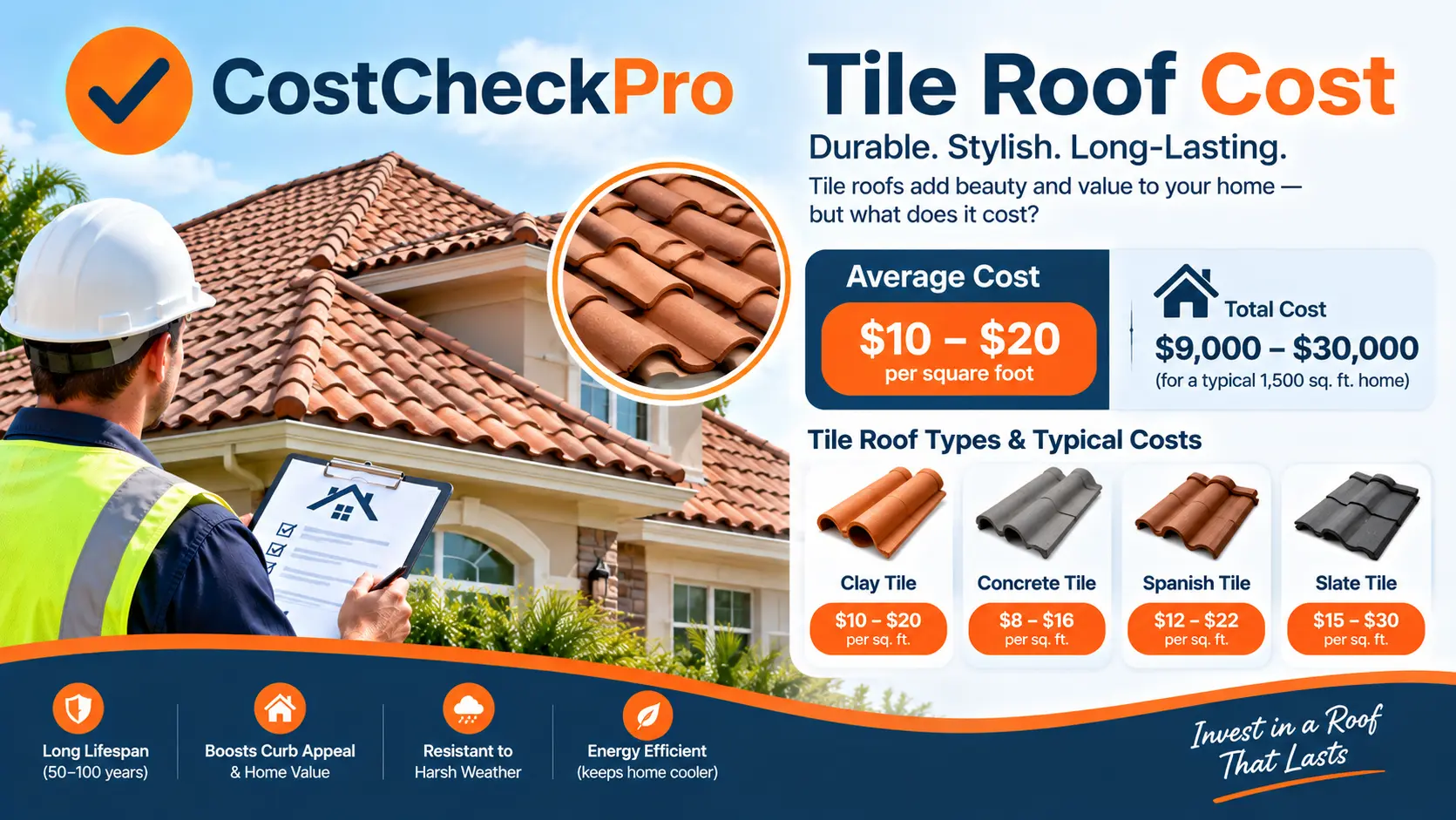
A tile roof typically costs between $800 and $1,800 per square (100 square feet) installed, which puts a full roof replacement for an average 2,000 square foot home somewhere between $16,000 and $45,000 depending on the tile material, roof pitch and your location. Clay and concrete tile sit on the higher end of roofing materials because of the weight they carry, the skilled labor needed to install them and the extra structural work some homes need before tile can go on at all. If your home has asphalt shingles and you're comparing options, our roofing cost calculator gives a faster estimate for shingle pricing specifically.
Tile roofing is especially common in warm, sunny climates like Florida, the Southwest and Southern California, where its heat resistance, durability against wind and long lifespan make it a popular choice despite the higher upfront cost compared to asphalt shingles. This guide walks through what drives tile roof pricing, how the different tile materials compare, and what to expect from the installation process.
Average cost by tile type
| Tile material | Cost per square foot | Cost per square (100 sq ft) |
|---|---|---|
| Concrete tile | $8 – $12 | $800 – $1,200 |
| Clay tile | $12 – $18 | $1,200 – $1,800 |
| Slate tile | $15 – $25 | $1,500 – $2,500 |
| Synthetic/composite tile | $7 – $12 | $700 – $1,200 |
These figures reflect installed cost, meaning materials and labor combined, but they typically don't include tear-off of an old roof or any structural reinforcement work, which get quoted separately once a contractor has inspected your home in person.
What drives the price up or down
Roof size and pitch matter more than most homeowners expect going in. A steep roof takes longer to work on safely and needs extra scaffolding, roof jacks or harnessing for the crew, which adds labor cost on top of the materials themselves. A simple, low-pitch roof on a smaller home will land near the bottom of these ranges, while a large home with a steep, cut-up roofline carrying multiple valleys and hips pushes toward the top, sometimes beyond it.
Structural reinforcement is the other big variable, and often the one homeowners aren't expecting. Clay and concrete tile are heavy, often weighing 600 to 1,100 pounds per square, and older homes originally built for lightweight asphalt shingles sometimes need their roof framing reinforced before tile can be installed safely. This inspection and any reinforcement work is usually quoted separately from the tile installation itself, so it's worth asking a contractor to check this specifically before you compare quotes, since a quote that skips this step may look artificially low.
Removal of the old roof also adds to the total project cost. Tearing off an existing asphalt or tile roof typically costs an extra $1 to $5 per square foot, and disposal fees vary depending on your local landfill rates and how much material comes off the roof. Tile in particular generates more debris weight to haul away than asphalt shingles, which can push disposal costs somewhat higher. If you're clearing out other debris from a larger renovation alongside the roof work, our junk removal cost calculator can estimate that separately.
Underlayment quality is another factor that affects both cost and long-term performance. Tile roofs rely on a waterproof underlayment beneath the tiles to actually keep water out, since the tiles themselves are more of a protective and decorative outer layer. Upgrading to a premium, longer-lasting underlayment adds to the upfront cost but can extend the time before the roof needs major work again, since underlayment often wears out well before the tiles themselves do.
Tile roof vs other roofing materials
Tile costs considerably more upfront than asphalt shingles, which typically run $4 to $7 per square foot installed, but tile roofs commonly last 50 years or more compared to 20 to 25 years for asphalt. Over the full lifespan of a home, many homeowners find tile works out to be cost-competitive once you factor in fewer replacement cycles and generally lower ongoing maintenance needs. For a direct asphalt shingle price comparison, our roofing cost calculator breaks down costs by shingle type and roof complexity.
Clay vs concrete vs synthetic tile
Clay tile has the longest track record of any tile material, with some clay tile roofs around the world lasting well over a century with proper maintenance, and it holds its color well over time since the color is baked into the material rather than applied as a coating. Concrete tile costs less than clay while offering similar durability and a 50-plus year lifespan, though it's typically heavier, which can mean more structural reinforcement is needed. Synthetic or composite tile, made from materials like polymer or rubber, mimics the look of clay or slate at a lower weight and often a lower price, making it an option worth considering for homes that can't easily support the weight of real clay or concrete without significant structural work.
How this calculator works
An online tile roof estimate like the one on this site combines four main factors: a base value for your vehicle... for your roof type, since tile, concrete and synthetic systems carry different base pricing due to material cost and weight. An age or complexity multiplier accounts for roof pitch and cut-up, a condition multiplier reflects how much of the structure underneath needs attention, and a regional adjustment accounts for local labor rate differences. Multiplying these together gives a realistic cost range for a specific home, though a written estimate from a contractor who has physically inspected the roof will always be more precise than any online calculator.
Signs you need a tile roof replacement rather than a repair
Individual cracked or broken tiles don't necessarily mean the whole roof needs replacing, since tiles can usually be swapped out one at a time without disturbing the rest of the roof. What does typically signal a full replacement is failing underlayment, which shows up as leaks appearing in multiple spots even though the tiles themselves look intact, since the waterproof barrier beneath them has broken down with age. Widespread tile cracking across large sections, visible sagging in the roofline, or repeated leaks that keep recurring after repairs are also signs the roof has reached the end of its useful life.
How climate affects tile roof cost and lifespan
Tile roofing performs especially well in hot, sunny climates, since the material resists UV degradation far better than asphalt shingles and its natural air gap underneath the tiles helps with attic ventilation and cooling. Florida homeowners dealing with intense sun and hurricane season storms often find tile holds up well against wind uplift when properly installed and fastened according to local building codes, which in hurricane-prone areas are typically stricter than in other regions. Our Florida home service cost guide covers regional pricing factors and storm-related roofing demand in more detail, including how hurricane season affects contractor availability and material lead times.
Cold climates present different considerations, since tile roofs need to be engineered with proper underlayment and flashing to handle freeze-thaw cycles, where water that gets trapped and freezes can crack tiles or push them out of place over time. Tile is less commonly used in very cold, snow-heavy regions for this reason, though it's not impossible with the right installation approach.
Energy efficiency and tile roofing
Tile roofing offers a natural energy efficiency advantage due to the airspace created between the tiles and the roof deck, which acts as a layer of insulation and allows heat to dissipate rather than transferring directly into the attic below. Lighter-colored tiles reflect more solar heat than darker ones, which can further reduce cooling costs in hot climates. This natural ventilation benefit is one reason tile remains popular in warm regions.
Frequently Asked Questions
Is a tile roof worth the extra cost compared to asphalt shingles?
For many homeowners, yes, especially if you plan to stay in your home long term. A tile roof's 50-plus year lifespan means you may never need to replace it again, while an asphalt roof will likely need replacing two or three times over that same period. Tile also holds up better in hot climates and tends to add more resale value in regions where it's the expected look, though the higher upfront cost means it's not the better choice for every budget or every home's structure.
Does my roof need reinforcement before tile can be installed?
It depends on how your home was originally built. Homes designed from the start for tile roofing usually have the framing to support the extra weight without any changes needed. Homes that currently have asphalt shingles, especially older ones, sometimes need additional bracing or reinforced trusses before a contractor will install tile, since the weight difference between the two materials is significant. A structural inspection before you get quotes will tell you definitively whether this applies to your home and roughly what it would add to the project cost.
How long does a tile roof installation take?
Most tile roof installations take one to three weeks from tear-off to completion, depending on the size of the roof, its complexity and the weather during the project. Larger homes with steep or cut-up rooflines take longer than simple, single-story homes, and any structural reinforcement work needed beforehand will add additional days to the overall timeline.
Can broken or cracked tiles be repaired instead of replacing the whole roof?
Yes, individual cracked or broken tiles can usually be replaced one at a time without touching the rest of the roof, and this is a common and much cheaper repair than a full replacement. The underlying waterproof underlayment beneath the tiles is what actually keeps water out, so a cracked tile here and there is often more of a cosmetic issue than an urgent leak risk, though it's still worth having a roofer check and replace them before water finds its way underneath over time.
Does tile roofing need more maintenance than other materials?
Tile roofs generally need less routine maintenance than asphalt, since the tiles themselves don't wear down the way shingle granules do over time. That said, the underlayment beneath the tiles has its own lifespan, typically 20 to 30 years, and may need replacing before the tiles do, even though the tiles on top can usually be removed, set aside and reinstalled over new underlayment. Periodic inspections for cracked tiles, especially after storms or heavy debris, help catch small issues before they become leaks.
Why is clay tile more expensive than concrete tile if they look similar?
Clay tile generally costs more due to the manufacturing process, which involves firing natural clay at high temperatures, and because its color is baked permanently into the material rather than applied as a surface coating that can fade over time. Clay also has a longer documented track record of extreme longevity in some climates. Concrete tile can be molded and colored to closely resemble clay at a lower manufacturing cost, which is why many homeowners choose it as a more budget-friendly alternative with similar visual appeal and a comparably long lifespan.
Can a tile roof be installed over an existing asphalt shingle roof?
This generally isn't recommended, and many contractors won't do it even if asked. Tile roofing requires proper underlayment and often battens installed directly against a sound deck, and installing over existing shingles can interfere with correct installation while also adding unnecessary weight on top of weight the structure may already be straining to support. A full tear-off to the deck is the standard and safer approach for a tile roof installation.
Will a tile roof increase my home's resale value?
In regions where tile is the expected architectural style, such as much of Florida, the Southwest and parts of Southern California, a tile roof can positively influence resale value and buyer perception compared to asphalt shingles. Its long remaining lifespan is also attractive to buyers and lenders, since it removes roof replacement as a near-term concern. In regions where tile isn't the local norm, the value impact is generally smaller, though the durability and lifespan benefits still apply regardless of location.